
Bathroom waterproofing mistakes can cost you thousands in repairs and turn your dream renovation into a nightmare. Water damage from poor waterproofing often remains hidden for months or even years, slowly deteriorating structural elements behind walls and beneath floors. When these issues finally surface, you’re looking at extensive repairs that go far beyond simple fixes.
This guide walks you through the most critical bathroom waterproofing mistakes that Sydney homeowners face during renovations. You’ll learn what causes these problems, how to spot them early, and why professional waterproofing compliance matters for your home’s longevity and value.
Key Takeaways
- Poor substrate preparation before waterproofing leads to membrane failure and costly leaks within the first year.
- Skipping waterproofing in critical zones like floor-to-wall junctions creates hidden water damage that spreads undetected.
- Applying membranes too thin or tiling before proper curing time compromises the entire waterproofing system.
- Using incompatible or low-quality waterproofing materials causes delamination and premature system breakdown.
- Professional installation following Australian Standards ensures compliance, durability, and long-term protection for your investment.
Critical Bathroom Waterproofing Mistakes That Cause Long-Term Damage
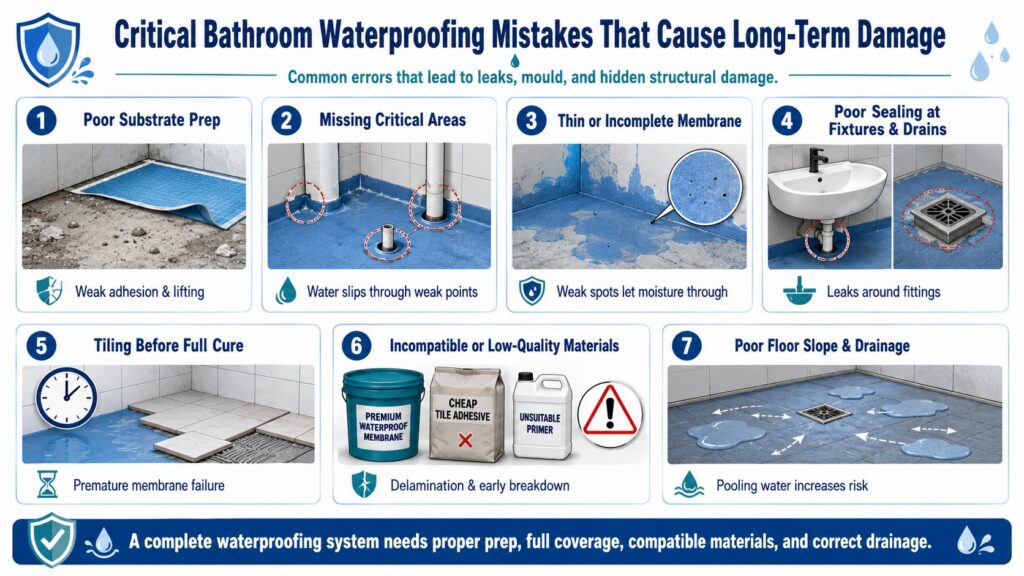
Certain errors during bathroom waterproofing create more severe consequences than others. Understanding these critical mistakes helps you recognize red flags during your renovation project. Each of these issues compromises the waterproofing system in ways that allow persistent water penetration.
1. Inadequate Substrate Preparation
The surface beneath your waterproofing membrane must be clean, level, and structurally sound. Dirt, dust, grease, or loose material prevents proper adhesion of the waterproofing membrane. When the membrane can’t bond correctly, it lifts away from the substrate, creating gaps where water accumulates and spreads.
Uneven surfaces with bumps or depressions also cause problems. These irregularities create thin spots in the membrane or areas where it bridges across gaps rather than adhering fully. Both scenarios lead to premature membrane failure and water penetration into the structure below.
2. Missing Waterproofing in Critical Areas
Floor-to-wall junctions, internal corners, and pipe penetrations are high-risk zones that require extra waterproofing attention. These areas experience the most water exposure and structural movement. Skipping proper waterproofing in these critical zones is one of the most serious bathroom waterproofing mistakes you can make.
Water naturally flows toward corners and collects around drain penetrations. Without reinforced waterproofing in these spots, moisture finds its way through gaps and spreads behind walls. This hidden water damage often goes unnoticed until you see visible mold growth or structural sagging.
3. Insufficient Membrane Thickness and Coverage
Waterproofing membranes need to be applied at the manufacturer’s specified thickness to function properly. Applying the membrane too thin creates microscopic pinholes and weak spots. These defects allow water to pass through gradually, defeating the entire purpose of the waterproofing layer.
Incomplete coverage leaves vulnerable areas exposed to water penetration. Some installers only waterproof the immediate shower area, assuming the rest of the bathroom floor stays dry. Splashing, condensation, and minor leaks mean that water reaches all bathroom floor areas over time.
4. Poor Sealing Around Fixtures and Drains
Drains, pipes, taps, and other penetrations through waterproofed surfaces need special attention. The waterproofing membrane must connect seamlessly to these fixtures using compatible sealants and flashing collars. Gaps around these penetrations create direct pathways for water to bypass your waterproofing system entirely.
Many bathroom waterproofing mistakes occur at these junction points because they require specific products and techniques. Generic sealants often aren’t compatible with waterproofing membranes. This incompatibility causes the seal to break down, opening gaps that allow persistent water infiltration.
5. Tiling Before Proper Curing Time
Waterproofing membranes need adequate time to cure before you apply tiles and adhesive over them. Rushing this step is a bathroom waterproofing mistake that compromises the membrane’s integrity. Uncured membranes can be damaged by the weight and moisture in tile adhesive.
Different waterproofing products have different curing requirements, ranging from a few hours to several days. Temperature and humidity affect curing times as well. Skipping the recommended curing period creates a weak waterproofing layer that fails prematurely under normal bathroom use.
6. Using Incompatible or Low-Quality Materials
Not all waterproofing products work well together or suit every substrate type. Using a membrane designed for concrete on a timber substrate, or mixing incompatible primers and topcoats, causes delamination. The waterproofing system separates from the substrate or fails at the interface between products.
Budget waterproofing materials often lack the durability and flexibility needed for long-term performance. These products may meet minimum standards initially but degrade faster under UV exposure, temperature changes, and structural movement. Choosing quality materials from reputable manufacturers costs more upfront but prevents expensive failures down the track.
7. Ignoring Proper Floor Slope and Drainage
Your bathroom floor needs a slight slope toward the drain to prevent water pooling. Standing water puts constant pressure on your waterproofing membrane and finds any weakness in the system. Poor drainage design is a bathroom waterproofing mistake that creates ongoing problems even when the membrane itself is properly installed.
Inadequate fall toward drains means water sits on the floor surface longer after showers and cleaning. This extended exposure increases the likelihood of water finding its way through grout lines and tile joints. Proper floor grading ensures water flows quickly to the drain, reducing stress on the waterproofing system.
How Professional Waterproofing Prevents These Common Errors
Licensed waterproofing specialists understand the technical requirements and Australian Standards that govern bathroom waterproofing. We follow systematic processes that address each potential failure point in your waterproofing system. This methodical approach eliminates the guesswork and shortcuts that cause bathroom waterproofing mistakes.
Professional waterproofing begins with thorough substrate assessment and preparation. Our team identifies any structural issues, moisture problems, or surface defects before waterproofing begins. We repair these underlying problems first, creating a stable foundation for the waterproofing membrane.
| Waterproofing Approach | DIY or Budget Installation | Professional Licensed Installation |
|---|---|---|
| Substrate Preparation | Basic cleaning, uneven surfaces often left as-is | Thorough assessment, leveling, repair of defects, proper priming |
| Critical Area Treatment | Corners and penetrations often missed or poorly sealed | Reinforced waterproofing with compatible flashings and sealants |
| Membrane Application | Inconsistent thickness, rushed application, incomplete coverage | Manufacturer-specified thickness, multiple coats, full coverage |
| Curing Time | Often rushed to meet timelines, inadequate drying | Full curing period respected, conditions monitored |
| Compliance Documentation | No certification or warranty provided | Waterproofing certificate, licensed tradesperson details, warranty backing |
We use compatible, high-quality waterproofing systems designed for your specific substrate and bathroom conditions. Product selection considers factors like substrate movement, water exposure levels, and long-term durability requirements. This careful matching of products to conditions prevents the compatibility issues that plague many DIY and budget waterproofing jobs.
The Role of Australian Standards in Bathroom Waterproofing
Australian Standard AS 3740 sets out the requirements for waterproofing in wet areas like bathrooms, laundries, and toilets. This standard specifies minimum waterproofing heights, critical zones that must be waterproofed, and installation requirements. Compliance with this standard isn’t optional for licensed renovation work in New South Wales.
The standard exists because bathroom waterproofing mistakes have caused extensive building defects across Australia. Following AS 3740 ensures your waterproofing system provides adequate protection and meets building code requirements. Non-compliant waterproofing can affect your insurance coverage and create liability issues if water damage occurs.
Licensed waterproofing contractors must provide a waterproofing certificate upon completion of the work. This certificate confirms that the waterproofing meets Australian Standards and has been installed by a qualified tradesperson. You might be wondering why this matters beyond compliance—the certificate becomes critical evidence if you ever need to make an insurance claim for water damage.
Recognizing Warning Signs of Waterproofing Problems
Even in existing bathrooms, you can spot indicators that point to bathroom waterproofing mistakes from previous renovations. These warning signs suggest that water is penetrating your waterproofing system and causing hidden damage. Early detection helps you address problems before they require extensive structural repairs.
- Grout discoloration or persistent mold growth in shower corners and floor-to-wall junctions indicates water penetration behind tiles.
- Loose or hollow-sounding tiles suggest that water has compromised the adhesive bond between tiles and substrate.
- Musty odors in the bathroom or adjacent rooms point to hidden moisture and mold growth within wall cavities.
- Paint peeling or bubbling on the other side of bathroom walls shows that water is passing through the waterproofing system.
- Visible water stains on ceilings below bathrooms clearly indicate that waterproofing has failed and water is leaking through.
- Soft or spongy flooring near showers and baths suggests that water has damaged the substrate beneath your tiles.
If you notice any of these signs, professional assessment is essential. Continuing to use a bathroom with failed waterproofing causes progressive damage that becomes more expensive to repair. Early intervention often allows for targeted repairs rather than complete bathroom reconstruction.
Why Shower Waterproofing Requires Special Attention
Shower areas face the most intense and frequent water exposure in your bathroom. Shower waterproofing must withstand daily water spray, standing water, and cleaning chemicals. This demanding environment makes shower zones particularly vulnerable to bathroom waterproofing mistakes.
Waterproofing in showers must extend to specific minimum heights on all walls. AS 3740 requires waterproofing to at least 1800mm above the floor level in enclosed showers, or 150mm above the highest water outlet in open showers. Stopping waterproofing below these heights is a common mistake that allows water to penetrate at higher wall levels.
Shower niches and built-in shelving create additional waterproofing challenges. These recessed areas need complete waterproofing coverage, including proper falls to prevent water pooling. Many bathroom waterproofing mistakes occur in these features because they require careful detailing and multiple membrane layers to ensure water-tightness.
We approach shower waterproofing with extra diligence during bathroom renovations. Our process includes pre-formed shower bases with integrated falls, proper niche waterproofing, and reinforced corners. This comprehensive approach eliminates the weak points where shower waterproofing typically fails.
What to Expect from Professional Bathroom Waterproofing Installation
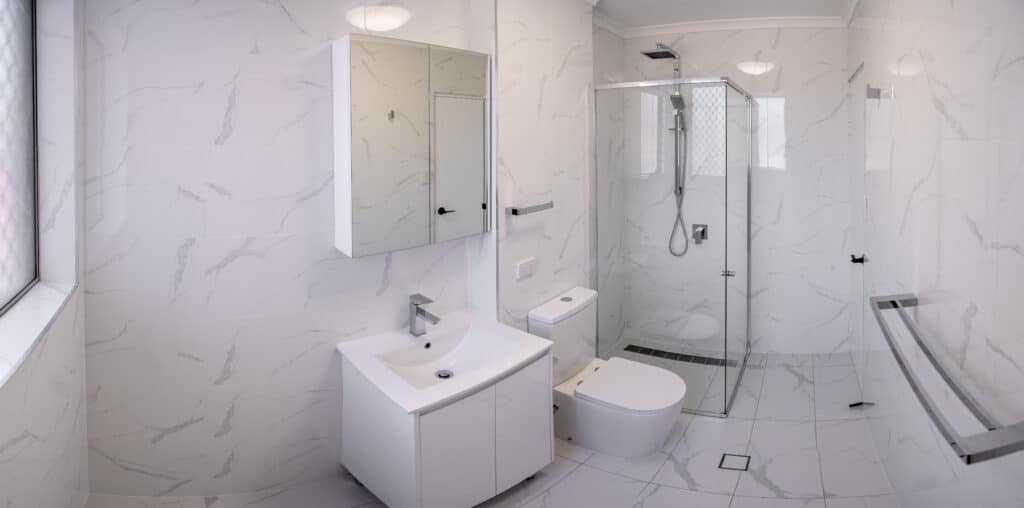
When you choose professional waterproofing for your bathroom renovation, the process follows a structured sequence. Understanding these steps helps you recognize quality work and ensures your project stays on track. Each phase builds on the previous one to create a complete waterproofing system.
Our waterproofing process starts with substrate inspection and preparation. We check for structural soundness, remove any damaged materials, and create a clean, level surface. This preparation phase often reveals hidden problems that need addressing before waterproofing can proceed.
Next comes primer application if required by the waterproofing system. Primers improve adhesion between the substrate and waterproofing membrane. Skipping this step when specified is a bathroom waterproofing mistake that compromises the entire system.
The waterproofing membrane is then applied in multiple coats to achieve the specified thickness. We pay special attention to corners, penetrations, and changes in plane. Reinforcing tapes and additional membrane layers go into these critical areas.
After the membrane cures fully, we conduct flood testing where possible. This test involves filling the shower area with water and checking for leaks. Any issues detected during testing get addressed before tiling begins.
Finally, we provide your waterproofing certificate with all required details. This documentation includes the licensed waterproofing contractor’s details, products used, and confirmation of compliance with AS 3740. You keep this certificate with your property records as proof of compliant waterproofing.
Making Informed Decisions About Your Bathroom Renovation
Bathroom waterproofing represents a relatively small portion of your total renovation budget, but it’s the most critical for long-term performance. Cutting corners on waterproofing to save money is a bathroom waterproofing mistake that costs far more when failures occur. Water damage repairs often exceed the cost of the entire original renovation.
When planning your bathroom renovation, prioritize waterproofing quality over cosmetic finishes. You can always upgrade taps and accessories later, but fixing failed waterproofing requires removing tiles and starting over. This perspective helps you allocate your budget to the elements that matter most for durability.
Ask potential renovation contractors about their waterproofing process and licensing. Licensed contractors can show you their waterproofing credentials and explain their installation methods. If a contractor can’t provide clear answers about waterproofing compliance, that’s a red flag indicating potential bathroom waterproofing mistakes ahead.
We bring over 15 years of bathroom renovation experience to every project across Sydney. Our team holds current waterproofing licenses and follows Australian Standards on every job. From initial consultation through to final certification, we ensure your bathroom waterproofing provides the protection and longevity your home deserves.
Conclusion
Quality bathroom waterproofing protects your home from expensive water damage and creates a durable foundation for your renovation. Avoiding the common bathroom waterproofing mistakes outlined in this guide requires professional expertise, quality materials, and strict adherence to Australian Standards. These elements combine to deliver waterproofing systems that perform reliably for decades.
Antons Renovation brings over 15 years of proven bathroom waterproofing expertise to Sydney homes. We follow strict Australian standards to prevent costly moisture damage. Get started with a trusted local team today.
Related Articles
- Bathroom Waterproofing Basics to Prevent Leaks and Water Damage
- 5 Signs You Need Professional Shower Leak Repair Today
- Bathroom Waterproofing Checklist for Shower, Floors, and Walls
FAQs
What Are Common Bathroom Waterproofing Mistakes?
Common bathroom waterproofing mistakes include insufficient coverage of waterproofing membranes, neglecting to seal joints and corners, using incompatible materials, and failing to allow for proper drainage. At Antons Renovation, our experienced team ensures these critical areas are expertly addressed to prevent future issues.
How Can I Avoid Waterproofing Mistakes In My Bathroom?
To avoid waterproofing mistakes, hire a qualified contractor who understands local regulations and best practices. Ensure thorough surface preparation, use high-quality materials, and follow manufacturer guidelines. Our 15 years of hands-on experience means we know how to deliver seamless waterproofing that stands the test of time.
What Happens If Bathroom Waterproofing Is Done Incorrectly?
If bathroom waterproofing is done incorrectly, it can lead to water damage, mold growth, structural issues, and costly repairs. At Antons Renovation, we prioritize proper waterproofing to safeguard your investment and ensure lasting functionality in your home.
How Do I Know If My Bathroom Is Properly Waterproofed?
You can assess if your bathroom is properly waterproofed by checking for signs of moisture or mold, ensuring all joints and seams are sealed, and confirming that water drains appropriately. Our skilled team conducts thorough inspections and uses premium materials to guarantee your bathroom is waterproofed correctly.
What Materials Should I Avoid When Waterproofing A Bathroom?
Avoid using low-quality sealants, incompatible materials, and products not specifically designed for wet areas. At Antons Renovation, we utilize trusted suppliers and premium fixtures to ensure your bathroom is waterproofed with the best materials available.
