
Planning a bathroom renovation requires more than just a vision. You need a complete bathroom renovation materials list to ensure nothing gets overlooked during the transformation. From waterproofing membranes to vanity fixtures, each material plays a role in creating a functional and beautiful space that lasts.
This guide walks you through every essential item for your bathroom renovation. You will learn what materials to prioritise, how to select durable finishes, and why working with licensed professionals like our team at Anton’s Renovation ensures compliance with Australian Standards and quality that stands the test of time.
Key Takeaways
- A comprehensive bathroom renovation materials list covers structural elements, fixtures, finishes, and accessories to avoid project delays.
- Waterproofing materials and proper ventilation are mandatory under Australian building codes to prevent moisture damage and ensure long-term durability.
- Selecting quality tiles, vanities, and faucets impacts both aesthetics and functionality in your renovated bathroom space.
- Licensed professionals help navigate material selection, compliance requirements, and installation standards for a stress-free renovation experience.
- Planning ahead with a detailed materials checklist saves time, reduces waste, and keeps your project on budget from start to finish.
Core Structural and Prep Materials for Bathroom Renovations
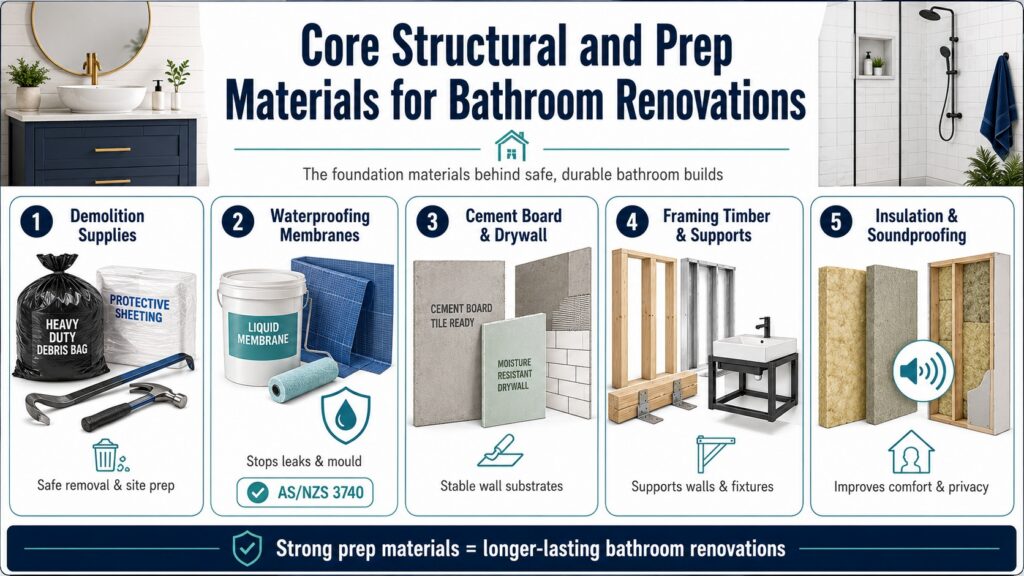
Before you install any fixtures or tiles, your bathroom needs a solid foundation. Structural materials form the backbone of every successful renovation project. These items ensure walls, floors, and ceilings can handle moisture, weight, and daily use without compromising safety or longevity.
Start with demolition supplies if you are removing old fixtures and finishes. You will need heavy-duty bags for debris, protective sheeting, and tools for safe removal. Once the space is cleared, framing materials like timber studs or steel frames may be required to adjust wall layouts or support new fixtures.
Waterproofing Membranes and Barriers
Waterproofing is non-negotiable in Australian bathroom renovations. Moisture barriers prevent water from seeping into walls and floors, which can lead to structural damage and mould growth. Liquid membranes, sheet membranes, and vapour barriers are common options that meet AS/NZS 3740 standards.
Our team at Anton’s Renovation applies waterproofing to all wet areas, including shower bases, floors, and walls up to required heights. This step protects your investment and ensures compliance with NSW building regulations. Skipping waterproofing or using substandard products can result in costly repairs down the track.
Cement Board and Drywall
Cement board is the preferred substrate for wet areas because it resists moisture better than standard drywall. It provides a stable surface for tile adhesion and prevents warping or deterioration over time. Use cement board behind showers, bathtubs, and around basins where water exposure is high.
Standard drywall can be used in dry zones like above vanities or on ceilings, provided it is moisture-resistant grade. Always check manufacturer specifications and local building codes before selecting wall substrates. Proper installation ensures your finishes stay secure and your bathroom remains safe for years.
Framing Timber and Structural Supports
If you are reconfiguring your bathroom layout, framing timber or metal studs will be needed to build new walls or support heavy fixtures. Load-bearing walls require engineered timber or steel to meet structural requirements. Non-load-bearing walls can use standard framing timber or lightweight metal studs.
Structural supports are also critical for wall-mounted vanities, toilets, and shower screens. Reinforced blocking or brackets installed during framing prevent fixtures from pulling away from walls under normal use. Proper framing ensures your bathroom is both functional and code-compliant.
Insulation and Soundproofing
Insulation in external walls helps regulate temperature and reduce energy costs. In bathrooms, insulation also controls condensation and prevents moisture buildup inside wall cavities. Use insulation rated for wet areas to avoid mould and mildew issues.
Soundproofing batts or panels between walls and floors improve privacy and comfort, especially in multi-story homes or apartments. Acoustic insulation reduces noise from plumbing, showers, and foot traffic. This small addition makes a big difference in overall livability.
Essential Fixtures and Fittings in Your Bathroom Renovation Materials List
Fixtures define the functionality and style of your renovated bathroom. Choosing the right vanity, toilet, shower, and bathtub ensures your space works seamlessly for your household. Quality fixtures also add value to your property and reduce maintenance over time.
When selecting fixtures, consider water efficiency, durability, and compliance with Australian plumbing standards. Our team helps clients navigate options that suit their budget, design preferences, and practical needs. Here are the core fixtures every bathroom renovation requires.
Vanity and Basin
Your vanity provides storage and anchors the bathroom’s design. Wall-hung vanities suit compact spaces and make floor cleaning easier. Freestanding vanities offer more storage and work well in larger bathrooms with traditional or modern aesthetics.
Basins come in various styles including undermount, vessel, and integrated options. Undermount basins create a seamless look and simplify countertop cleaning. Vessel basins add visual interest but require careful height planning to ensure comfortable use. Choose a basin that complements your vanity and meets household needs.
Shower Base and Enclosure
Shower bases must be slip-resistant, durable, and properly graded for drainage. Acrylic bases are lightweight and affordable. Tiled shower bases offer custom design flexibility and can be built to any size or shape. Ensure your shower base is fully waterproofed before tiling or finishing.
Shower enclosures include frameless glass, semi-frameless, or framed options. Frameless glass provides a sleek, modern appearance and makes small bathrooms feel larger. Semi-frameless and framed enclosures are more budget-friendly while still offering durability and water containment. Select an enclosure that suits your layout and style.
Bathtub Options
Bathtubs are available in freestanding, drop-in, and alcove styles. Freestanding tubs create a focal point and work well in spacious bathrooms. Drop-in tubs are installed within a deck or platform, offering customisation options for surrounding finishes. Alcove tubs fit snugly between three walls, maximising space in smaller bathrooms.
Material choices include acrylic, cast iron, and composite options. Acrylic tubs are lightweight, easy to install, and retain heat well. Cast iron tubs are extremely durable and offer a classic look but require reinforced flooring. Composite materials combine durability with modern aesthetics and are easy to maintain.
Toilet Selection
Toilets are available in back-to-wall, wall-hung, and close-coupled designs. Wall-hung toilets save floor space and simplify cleaning but require in-wall cisterns and reinforced framing. Close-coupled toilets are the most common and affordable option, with the cistern mounted directly on the bowl. Back-to-wall toilets offer a streamlined look with the cistern concealed in cabinetry or a false wall.
Water efficiency is a key consideration. Look for toilets with WELS ratings of four stars or higher to reduce water consumption without sacrificing performance. Dual-flush mechanisms are standard in Australia and help conserve water with every use.
Tapware and Mixer Sets
Tapware includes basin mixers, shower mixers, and bath spouts. Choose finishes that match your overall design, such as chrome, matte black, brushed nickel, or brass. Quality tapware resists corrosion and maintains appearance over time, even in high-moisture environments.
Mixer sets control water temperature and flow. Thermostatic mixers offer precise temperature control and prevent scalding, making them ideal for families with children or elderly members. Standard mixers are more affordable and work well for most applications. Ensure all tapware complies with Australian plumbing standards and carries appropriate certifications.
Flooring and Wall Finishes for Bathroom Renovations
Flooring and wall finishes transform your bathroom’s look and feel. These materials must withstand moisture, temperature changes, and daily wear. Selecting the right tiles, grout, and adhesive ensures your finishes remain beautiful and functional for years.
Tiles are the most popular choice for bathroom floors and walls because they are water-resistant, easy to clean, and available in countless styles. Pairing quality tiles with proper installation techniques prevents cracking, water damage, and grout deterioration. Let’s explore the key materials you will need for flooring and walls.
Ceramic and Porcelain Tiles
Ceramic tiles are affordable, versatile, and available in many colours and patterns. They work well for walls and low-traffic floors. Porcelain tiles are denser and more durable, making them suitable for high-traffic areas and wet zones like shower floors. Porcelain resists staining and moisture better than ceramic, but both require proper sealing and maintenance.
Tile size and layout impact the visual space. Large-format tiles create a seamless look and reduce grout lines, which simplifies cleaning. Smaller mosaic tiles add texture and grip, making them ideal for shower floors. Choose slip-resistant tiles for floor areas to prevent accidents.
Natural Stone Options
Natural stone tiles like marble, travertine, and slate offer unique beauty and character. Each piece has distinct veining and colour variations that create a one-of-a-kind look. Stone tiles require regular sealing to protect against moisture and staining, especially in high-use areas.
Stone is cooler underfoot and can feel luxurious in larger bathrooms. It pairs well with underfloor heating systems to improve comfort. Keep in mind that stone tiles are heavier than ceramic or porcelain, so ensure your floor structure can support the additional weight.
Tile Adhesive and Grout
Tile adhesive bonds tiles to walls and floors. Use waterproof adhesive in wet areas to prevent tiles from loosening over time. Flexible adhesive accommodates minor movement and reduces the risk of cracking, especially on timber or suspended floors.
Grout fills the gaps between tiles and prevents water penetration. Epoxy grout is more durable and stain-resistant than cement-based grout, making it ideal for showers and high-moisture areas. Grout colour can enhance or blend with your tile choice, so select carefully to achieve your desired look.
Waterproof Paint and Wall Treatments
Waterproof paint is suitable for ceilings and dry wall areas in bathrooms. It resists moisture and prevents mould growth. Use paint with mould inhibitors and ensure proper ventilation to maintain air quality and prevent condensation buildup.
Wall panels or acrylic sheets offer a grout-free alternative to tiles. These materials are easy to clean, quick to install, and create a seamless finish. They work well for shower walls and backsplashes, though they may not suit every design style.
Plumbing and Drainage Components
Plumbing and drainage materials ensure water flows correctly and waste exits efficiently. These components are hidden behind walls and floors, but they are critical to your bathroom’s performance. Using quality materials and licensed plumbers prevents leaks, blockages, and compliance issues.
Plumbing work must meet Australian Standards and local regulations. Our team coordinates with licensed plumbers to install pipes, fittings, and drainage systems that meet code requirements. Here are the plumbing materials you will need for a complete bathroom renovation.
- Water supply pipes: Copper and PEX pipes are common for hot and cold water lines. Copper is durable and heat-resistant. PEX is flexible, easy to install, and resistant to corrosion.
- Drainage pipes: PVC pipes are standard for waste and drainage. They are lightweight, affordable, and resistant to corrosion. Ensure all drainage pipes are properly graded to prevent standing water and blockages.
- Traps and waste fittings: P-traps and S-traps prevent sewer gases from entering your bathroom. These fittings connect fixtures to drainage pipes and must be installed correctly to maintain water seals.
- Shut-off valves: Install shut-off valves on water supply lines for sinks, toilets, and showers. These valves allow you to isolate fixtures for maintenance or repairs without shutting off water to the entire home.
- Shower drains and grates: Choose drains with removable grates for easy cleaning. Linear drains create a modern look and improve water flow in tiled showers. Ensure drains are compatible with your waterproofing system.
- Flexible hoses and connectors: Use flexible hoses to connect tapware and fixtures to water supply lines. These hoses accommodate minor movement and simplify installation in tight spaces.
Lighting, Ventilation, and Electrical Materials
Proper lighting and ventilation improve safety, comfort, and air quality in your bathroom. Electrical work must be completed by licensed electricians to meet Australian Standards and prevent hazards. Planning your lighting and ventilation early ensures your bathroom is functional and compliant.
Lighting sets the mood and enhances visibility for grooming tasks. Ventilation removes moisture and odours, preventing mould and mildew. Here are the key electrical and ventilation materials for your bathroom renovation.
Exhaust Fans and Ventilation Systems
Exhaust fans are mandatory in most Australian bathrooms to control humidity and improve air quality. Choose a fan with adequate airflow capacity for your room size, measured in litres per second. Quiet operation and energy efficiency are important features to consider.
Ducted exhaust fans vent moisture outside the home, which is the most effective option. Recirculating fans filter air but do not remove moisture, so they are less suitable for bathrooms. Install fans on a timer or humidity sensor to ensure they run long enough after showers to clear moisture.
Downlights and Task Lighting
Downlights provide general illumination and work well in bathrooms with standard or high ceilings. Use IP-rated downlights designed for wet areas to ensure safety around showers and baths. LED downlights are energy-efficient and have long lifespans, reducing maintenance and running costs.
Task lighting around mirrors improves visibility for grooming and makeup application. Wall-mounted sconces or backlit mirrors provide even, shadow-free lighting. Position task lights at eye level to avoid harsh shadows and glare.
Heated Towel Rails
Heated towel rails add comfort and help dry towels faster, reducing musty odours. Electric rails are easy to install and operate independently of your home’s heating system. Hydronic rails connect to your hot water system and are more energy-efficient for larger households.
Choose a rail size that fits your wall space and towel capacity. Stainless steel and chrome finishes resist corrosion and match most bathroom styles. Install rails near showers or baths for convenient access to warm towels.
Electrical Outlets and Switches
Electrical outlets in bathrooms must be positioned safely and comply with Australian wiring standards. Outlets near basins and showers require RCD protection to prevent electric shock. Avoid installing outlets directly above or near water sources.
Light switches should be placed outside the bathroom or in dry zones away from showers and baths. Use moisture-resistant switches and cover plates to prevent corrosion. All electrical work must be completed by a licensed electrician and inspected for compliance.
Bathroom Accessories and Finishing Touches
Accessories complete your bathroom renovation and add functionality to your new space. Towel holders, mirrors, and storage solutions enhance daily use and keep your bathroom organised. Selecting accessories that match your fixtures and finishes creates a cohesive design.
Quality accessories resist corrosion and maintain appearance in high-moisture environments. Choose finishes that complement your tapware and hardware for a polished look. Here are the essential bathroom accessories to include in your materials list.
- Mirrors and medicine cabinets: Mirrors reflect light and make small bathrooms feel larger. Medicine cabinets provide hidden storage for toiletries and medications. Choose fog-resistant mirrors or install demister pads for clear visibility after showers.
- Towel rails and hooks: Install towel rails near showers and baths for easy access. Hooks work well in compact spaces and provide additional hanging options. Select rust-resistant materials like stainless steel or brass.
- Toilet paper holders: Wall-mounted holders keep toilet paper dry and within reach. Recessed holders save space and create a streamlined look. Freestanding holders suit bathrooms where wall mounting is not practical.
- Soap dispensers and holders: Built-in soap dispensers reduce clutter and eliminate plastic bottles. Soap dishes or holders near basins and showers keep soap accessible and organised.
- Bathroom rugs and mats: Rugs add comfort underfoot and absorb water near showers and baths. Choose machine-washable, quick-drying materials to prevent mould and mildew. Non-slip backing improves safety on tiled floors.
- Storage shelves and baskets: Floating shelves provide open storage for towels and decorative items. Baskets keep smaller items organised and hidden. Install shelves in unused corners or above toilets to maximise space.
Why Work With Anton’s Renovation for Your Bathroom Project
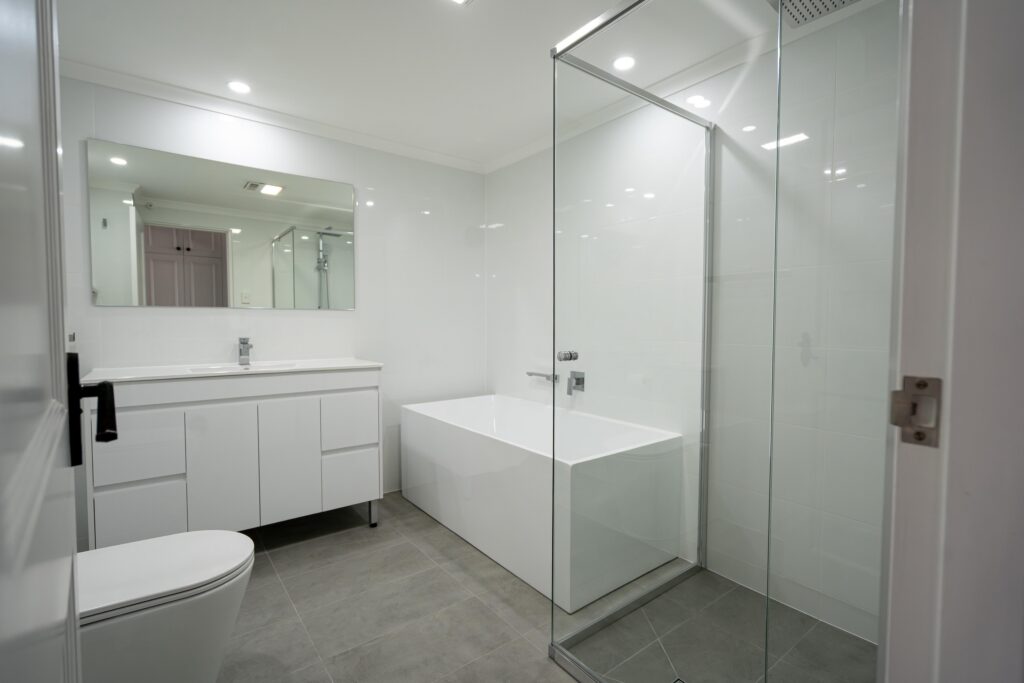
Selecting the right materials is only part of a successful bathroom renovation. You also need experienced professionals who understand compliance, quality installation, and project management. Our team at Anton’s Renovation has over 15 years of experience transforming bathrooms across Sydney, from compact Inner West apartments to spacious family homes in the Hills District.
We guide you through every step, from material selection to final handover. Our licensed trades ensure all work meets NSW Fair Trading requirements and Australian building standards. We use premium fixtures and finishes from trusted suppliers, so your renovated bathroom looks stunning and functions flawlessly for years to come.
You can trust us to respect your home, stick to our word, and deliver on time without cutting corners. We offer transparent communication, detailed project timelines, and a strong service guarantee. Whether you need a full bathroom transformation or a targeted upgrade, we tailor every project to your vision, budget, and lifestyle.
Ready to start your bathroom renovation? Call us at 0466 334 065 or request a free onsite quote to discuss your project. We will walk you through material options, design ideas, and realistic timelines, so you know exactly what to expect from start to finish.
Conclusion
A complete bathroom renovation materials list covers structural elements, fixtures, finishes, and accessories that work together to create a functional and beautiful space. Selecting quality materials and working with licensed professionals ensures compliance, durability, and peace of mind. Your renovated bathroom should serve your household well for years, adding comfort and value to your home.
Antons Renovation brings over 15 years of bathroom renovation expertise to Sydney homeowners. We source premium fixtures and materials for lasting, stylish results. Get started on your dream bathroom today.
Related Articles
- Essential Bathroom Renovation Tools Checklist for Homeowners
- 5 Essential Bathroom Repair Basics Every Homeowner Should Know
- How to Plan a Bathroom Renovation Step by Step
FAQs
What Materials Do I Need For A Bathroom Renovation?
For a successful bathroom renovation, you’ll typically need tiles, waterproofing membranes, fixtures (like sinks, toilets, and showers), cabinetry, countertops, lighting, and plumbing materials. Our experienced team at Antons Renovation can guide you in selecting the right high-quality materials to suit your vision and needs.
How Do I Choose Materials For A Bathroom Remodel?
Choosing materials for your bathroom remodel involves considering factors such as durability, style, and budget. It’s essential to select materials that complement your home’s design while also meeting practical requirements. At Antons Renovation, we prioritize understanding your preferences and lifestyle to help you make informed decisions.
What Is The Average Cost Of Bathroom Renovation Materials?
The average cost of bathroom renovation materials can vary significantly based on the quality and type you choose, typically ranging from $2,000 to $10,000. Our team at Antons Renovation can provide a detailed estimate that aligns with your budget while ensuring you receive premium materials that enhance your space.
What Are The Best Flooring Options For A Bathroom Renovation?
Popular flooring options for bathroom renovations include porcelain tiles, vinyl, and natural stone. Each option offers unique benefits in terms of durability and aesthetics. Our experienced professionals at Antons Renovation can help you select the best flooring that fits your style and functional needs.
Do I Need Special Materials For A Small Bathroom Renovation?
While you don’t necessarily need special materials for a small bathroom renovation, opting for space-saving fixtures and lighter colors can create an illusion of space. Our skilled team at Antons Renovation specializes in tailored solutions that maximize functionality and style, even in compact areas.
