
Planning a bathroom renovation requires more than vision and budget. You need the right tools to transform your space safely and efficiently. Whether you tackle certain tasks yourself or hire professionals, understanding the essential equipment helps you make informed decisions throughout your project.
This guide breaks down the complete bathroom renovation tools checklist for Sydney homeowners. You will learn which tools matter most, how professionals approach each phase, and when to call in licensed experts for compliance and quality results.
Key Takeaways
- A comprehensive bathroom renovation tools checklist includes measuring devices, demolition equipment, installation tools, and safety gear for each project phase.
- Professional renovators use specialised tools like laser levels, pipe cutters, and tile leveling systems that ensure precision and compliance with Australian building standards.
- Planning tools such as 3D design software and accurate measurements prevent costly mistakes before demolition begins.
- Licensed contractors bring trade-specific equipment for plumbing, electrical, and waterproofing work that homeowners cannot legally perform in NSW.
- Safety equipment including goggles, dust masks, and voltage meters protect against common renovation hazards during bathroom upgrades.
Understanding Your Bathroom Renovation Tools Checklist
Every successful bathroom renovation starts with proper preparation and the right equipment. Your tools determine how smoothly the project progresses from demolition through final installation. Missing even one essential item can delay your timeline and increase costs unnecessarily.
The bathroom renovation tools checklist varies based on project scope and complexity. A simple vanity replacement requires fewer items than a complete gut renovation with new plumbing and electrical work.
Most bathroom renovations in Sydney require compliance with NSW building codes and waterproofing standards. Licensed professionals carry specialised equipment to meet these requirements, which protects your investment and ensures your new bathroom functions properly for years.
Planning and Measurement Tools
Accurate measurements form the foundation of any renovation project. You cannot order materials, plan layouts, or install fixtures without precise dimensions of your existing space.
A quality tape measure remains your most-used tool throughout the renovation process. Digital laser measures offer faster readings for larger spaces and help calculate square footage for tiles and flooring materials.
Free 3D design software lets you visualise your new bathroom before demolition begins. These planning tools help you spot potential issues with fixture placement, storage solutions, and traffic flow that might not be obvious on paper.
Demolition Equipment
Removing old fixtures and finishes requires specific tools designed for controlled destruction. The demolition phase generates the most dust and debris, so proper equipment protects both you and your home.
A pry bar and hammer handle most tile removal and fixture detachment tasks. Reciprocating saws cut through old plumbing pipes and damaged wall sections quickly when needed.
Professional renovators often use oscillating multi-tools for precision cuts around existing structures. These versatile devices minimise damage to areas you want to preserve, which reduces repair work later in the project.
Essential Installation Tools for Bathroom Renovations
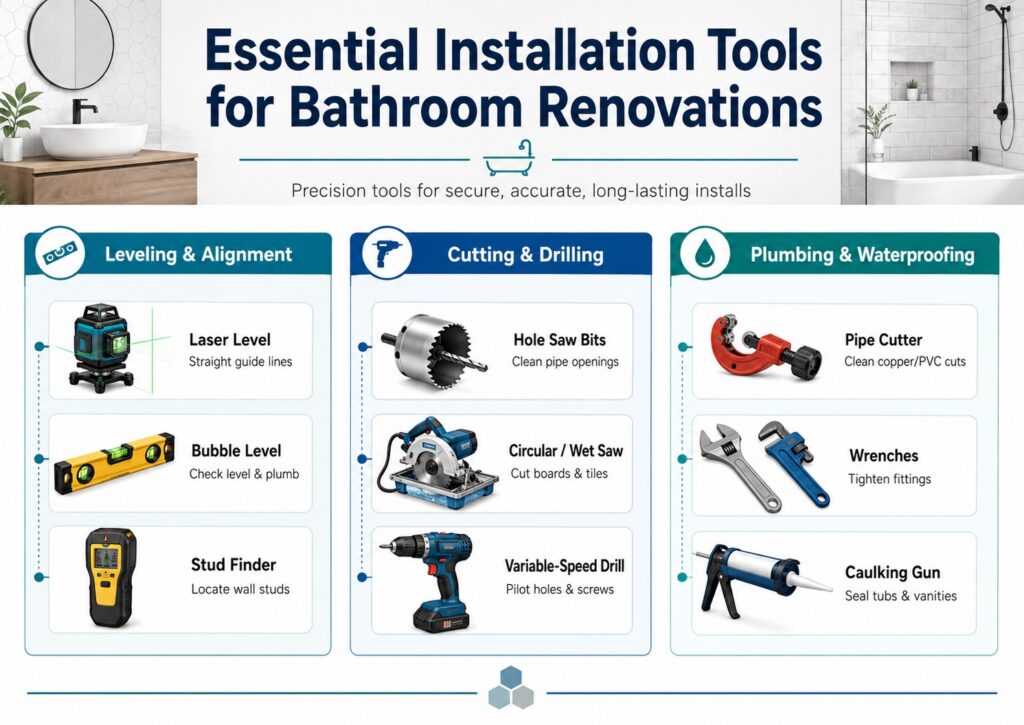
Installation work demands precision tools that ensure proper fixture placement and secure mounting. Your bathroom accessories, cabinets, and fixtures must be level, plumb, and firmly attached to prevent future problems. Professional-grade installation equipment makes the difference between a bathroom that looks good and one that performs flawlessly for decades.
Leveling and Alignment Devices
Laser levels project perfectly horizontal and vertical lines across walls and floors. These tools eliminate guesswork when installing vanities, mirrors, and tile patterns that must align precisely.
Traditional bubble levels still serve important roles for checking individual fixture installations. A four-foot level works best for vanity installations, while smaller torpedo levels fit in tight spaces around toilets and pipes.
Stud finders locate wall framing behind tiles and drywall. Mounting heavy bathroom cabinets and grab bars into studs prevents fixtures from pulling loose over time.
Cutting and Drilling Equipment
Hole saw bits create clean openings for pipe penetrations and fixture mounting hardware. Different sizes accommodate various plumbing connections and electrical boxes required in modern bathrooms.
Circular saws with appropriate blades cut cement board, drywall, and timber blocking for backing support. Wet saws or grinders with diamond blades handle tile cuts for precise fitting around fixtures and corners.
A quality drill with variable speed settings drives screws and creates pilot holes in different materials. Cordless models offer flexibility in tight bathroom spaces where power cords become obstacles.
Plumbing and Waterproofing Tools
Pipe cutters create clean cuts in copper and PVC plumbing lines without crushing or deforming the material. Proper cuts ensure watertight connections that prevent leaks behind walls and under floors.
Wrenches in various sizes tighten supply lines, drain fittings, and fixture connections. Basin wrenches reach into cramped spaces under vanities where standard tools cannot fit.
Caulking guns apply waterproof sealants around tubs, showers, and vanities. Quality waterproofing prevents moisture damage that leads to mould growth and structural deterioration in Sydney’s humid climate.
Safety Equipment for Bathroom Renovation Projects
Safety equipment is essential for reducing injury risks during bathroom demolition, installation, and finishing work. Bathroom renovations can expose homeowners to sharp materials, flying debris, electrical hazards, chemical splashes, and harmful dust. Using the right protection gear helps make each stage of the project safer, cleaner, and easier to manage.
- Safety goggles: Shield your eyes from tile chips, dust, grout particles, and chemical splashes during cleaning, cutting, and surface preparation.
- Full-face shields: Provide extra protection when using grinders, saws, or other power tools that may produce fast-moving debris.
- Dust masks or respirators: Filter harmful particles released when cutting tiles, cement board, plaster, or other renovation materials.
- Work gloves: Protect your hands from cuts, splinters, rough surfaces, and chemical irritation during demolition and installation.
- Task-specific gloves: Heavy leather gloves are useful for demolition, while rubber or chemical-resistant gloves are better for cleaning, sealing, and handling harsh products.
- Voltage testers: Help confirm that electrical circuits are turned off before working near outlets, switches, lighting, or ventilation fixtures.
Wearing proper safety equipment should be treated as a basic part of every bathroom renovation, not an optional step. Even small tasks can lead to injuries when dust, sharp edges, tools, or electrical components are involved. Preparing the right gear before work begins helps protect both the renovator and the quality of the finished project.
Specialised Tools Professional Renovators Use
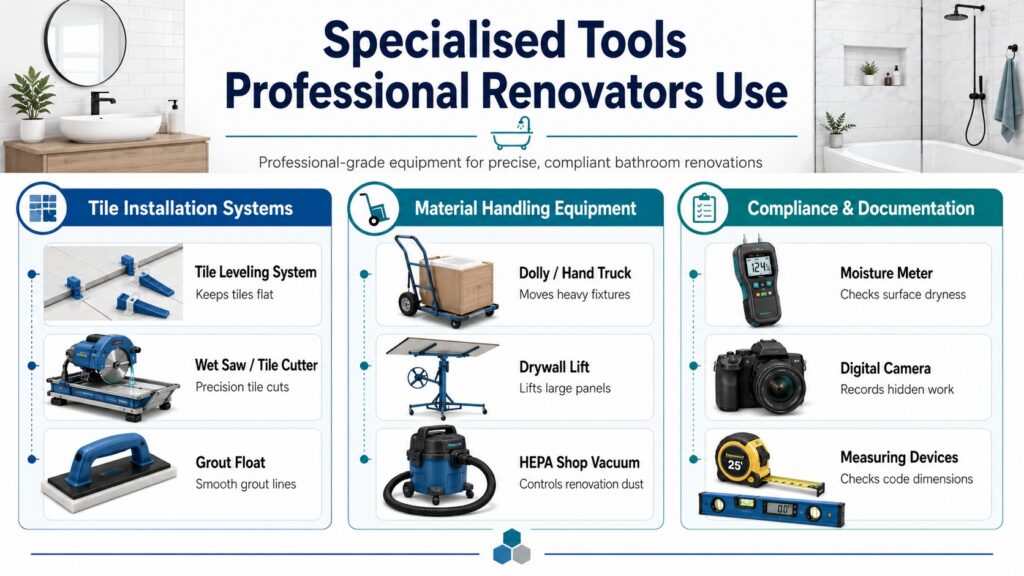
Licensed bathroom renovation specialists carry equipment beyond typical homeowner toolkits. These professional-grade devices ensure compliance with Australian building standards and deliver results that last. When you work with experienced teams, you benefit from their investment in quality tools and expertise using them correctly.
Tile Installation Systems
Tile leveling systems create perfectly flat surfaces across large floor and wall installations. These devices eliminate lippage between tiles that causes uneven surfaces and premature grout cracking.
Professional tile cutters make precise cuts faster than handheld tools. Wet saws with adjustable fences handle diagonal cuts, notches, and complex patterns required for custom bathroom designs.
Grout floats and finishing tools apply and shape grout lines consistently. Proper grout application prevents water penetration and maintains the waterproof barrier essential in wet areas.
Material Handling Equipment
Dollies and hand trucks move heavy vanities, bathtubs, and material pallets without damaging floors or walls. Professional renovators protect your home throughout the project with proper material handling gear.
Drywall lifts position ceiling panels and large wall sections safely. These devices eliminate the need for multiple workers to hold materials in place during installation.
Shop vacuums with HEPA filters capture fine dust throughout the renovation process. Continuous cleanup maintains air quality and prevents dust from spreading throughout your home.
Compliance and Documentation Tools
Moisture meters verify that surfaces are dry enough for waterproofing membrane application. NSW building codes require specific moisture levels before sealing wet areas to prevent future failures.
Digital cameras document each phase of hidden work before covering walls and floors. This photographic record proves compliance and helps troubleshoot any future issues that might arise.
Measuring devices confirm that clearances, slopes, and dimensions meet Australian Standards requirements. Professional renovators check their work against code requirements throughout the installation process.
When to Use Professional Bathroom Renovation Services
Certain bathroom renovation tasks require licensed tradespeople under NSW law. Attempting these jobs yourself risks safety hazards, code violations, and insurance problems if something goes wrong. Understanding which work needs professional help protects your investment and ensures your renovation meets all legal requirements.
Plumbing modifications beyond simple fixture replacement require licensed plumbers in Sydney. Moving pipes, installing new drainage, or altering water supply lines involves skills and tools most homeowners lack.
Electrical work including new circuits, lighting installations, and ventilation fans must be completed by licensed electricians. NSW regulations prohibit unlicensed electrical work, and insurance companies may deny claims for DIY electrical failures.
Waterproofing in wet areas demands certified application following AS 3740 standards. Licensed waterproofers provide compliance certificates required for council approval and future property sales.
We specialise in complete bathroom renovations across Sydney, handling all trades and compliance requirements under one roof. Our team brings 15 years of experience and all necessary tools to transform your bathroom efficiently and legally.
Bathroom Renovation Cost Factors and Tool Investment
Understanding how tools and labour affect bathroom renovation cost helps you make informed decisions. Professional renovators spread equipment costs across many projects, which makes their services more economical than buying specialised tools for one-time use. Quality workmanship using proper tools delivers better long-term value than cheaper shortcuts that fail prematurely.
Tool rental offers a middle path for homeowners tackling some tasks themselves. Hire shops stock tile saws, demolition equipment, and finishing tools at daily or weekly rates that cost less than purchasing.
Labour represents the largest portion of professional bathroom renovation cost because skilled trades bring expertise and efficiency. Licensed plumbers, electricians, and waterproofers complete in hours what might take inexperienced homeowners days to finish.
Material waste decreases dramatically when professionals use precision tools and proven techniques. Accurate cuts, proper measurements, and efficient installation methods reduce the extra materials needed to compensate for mistakes.
We provide transparent pricing that includes all labour, materials, and compliance requirements for your bathroom renovation. Our fixed-rate approach eliminates surprises and helps you budget accurately from the start.
Conclusion
A complete bathroom renovation tools checklist helps you understand the equipment and expertise required for successful projects. While some homeowners enjoy tackling certain tasks themselves, professional renovators deliver superior results through specialised tools, trade skills, and compliance knowledge. Your bathroom deserves quality workmanship that functions flawlessly and looks beautiful for years to come.
Antons Renovation brings over 15 years of bathroom renovation expertise to Sydney homeowners. Our licensed team handles every detail with precision and transparency. Get started on your dream bathroom today.
Related Articles
- 5 Essential Bathroom Repair Basics Every Homeowner Should Know
- 5 Essential Bathroom Maintenance Tips for Lasting Elegance
- Essential Bathroom Renovation Materials List for Your Dream Space
FAQs
What Tools Do I Need For A Bathroom Renovation?
Essential tools for a bathroom renovation include a measuring tape, level, utility knife, hammer, screwdriver set, pliers, tile cutter, and a drill. At Antons Renovation, our experienced team is well-equipped with all these tools and more to ensure a professional finish.
How Do I Create A Bathroom Renovation Checklist?
To create a bathroom renovation checklist, start by defining your goals, budget, and timeline. Include items such as design preferences, necessary permits, and a list of materials. Our team at Antons Renovation can assist you in crafting a detailed checklist tailored to your specific needs.
What Are The Essential Supplies For A Bathroom Remodel?
Essential supplies for a bathroom remodel typically include tiles, fixtures (sink, toilet, shower), cabinetry, paint, and plumbing materials. At Antons Renovation, we source high-quality supplies from trusted suppliers to ensure a lasting and stylish outcome.
Do I Need Special Tools For Bathroom Renovation?
While basic tools are necessary, some specialized tools such as a tile saw, wet saw, or plumbing snake may be required for specific tasks. Our skilled team at Antons Renovation comes equipped with all necessary tools to handle any renovation task efficiently.
How Much Does It Cost To Renovate A Bathroom?
The cost to renovate a bathroom can vary widely based on factors like size, materials, and complexity of the project. On average, homeowners can expect to spend between $10,000 and $30,000. Antons Renovation provides personalized estimates to fit your budget and vision.
