
Your shower tray works hard every single day. It handles water, weight, cleaning products, and constant temperature changes. Most Sydney homeowners never think about their shower base until something goes wrong. By then, minor damage has often turned into a bigger problem that affects your entire bathroom.
This guide walks you through the five most common warning signs that your shower tray needs professional attention. You’ll learn what to look for, why early action matters, and how expert repair can save you time and money compared to full replacement.
Key Takeaways
- Visible cracks and chips in your shower tray allow water to seep beneath the surface, risking structural damage and mould growth.
- Persistent water pooling indicates drainage issues or an uneven shower base that needs professional assessment.
- Discolouration and stubborn stains often signal surface degradation that can be restored through expert resurfacing.
- A wobbly or flexing shower tray means the support structure beneath has failed and requires immediate repair.
- Lingering musty odours point to hidden moisture problems that professional shower tray repair can resolve.
Understanding When Your Shower Tray Needs Professional Attention
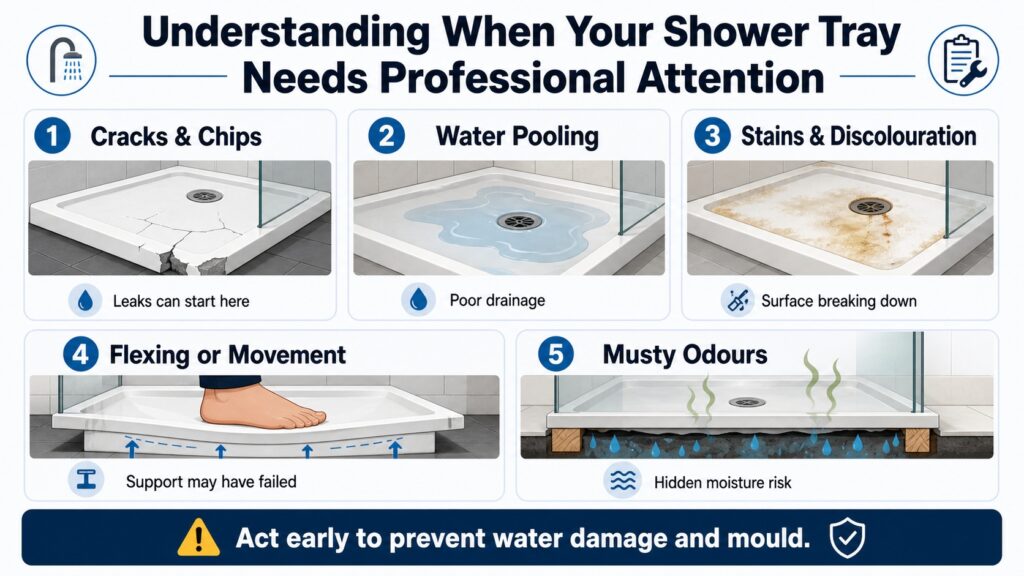
Shower trays take a beating over the years. They support your weight every time you step in. They handle hot and cold water cycling through daily. Chemical cleaners, dropped bottles, and general wear all contribute to gradual deterioration.
Many Sydney homes feature acrylic, fibreglass, or stone resin shower bases. Each material has a typical lifespan of 10 to 15 years with proper care. That lifespan can extend significantly when you address damage early.
Professional shower tray repair restores function and appearance without the disruption of full replacement. You avoid retiling, replumbing, and the extended timeline that comes with installing a new universal shower base. Early intervention keeps your bathroom functional and prevents water damage to surrounding structures.
Sign 1: Visible Cracks and Chips in the Shower Base
Cracks are the most obvious red flag. Even hairline fractures compromise the waterproof barrier that protects your floor joists and subfloor. Water finds its way through the smallest openings, and once it reaches the timber or concrete beneath, you’re looking at rot, rust, or structural weakening.
Chips around the drain or along the edges might seem cosmetic at first. They’re not. These damaged areas create rough surfaces where soap scum and bacteria accumulate. Over time, the damage spreads as water seeps in and freezes during colder months or expands with heat.
Our team at Anton’s Renovation has seen shower trays that started with a single small crack turn into major water damage within months. We use specialised epoxy resins and bonding agents to fill and seal cracks, restoring structural integrity. The repair process typically takes one to two hours, and your shower is ready to use within 24 hours.
Sign 2: Water Pooling and Drainage Problems
Water should flow smoothly toward the drain every time you shower. If you notice puddles forming in corners or along the edges, your shower tray has either shifted, settled unevenly, or developed a drainage fault. Standing water is more than an inconvenience. It’s a breeding ground for mould, mildew, and bacteria.
Pooling water also means prolonged contact with grout, sealant, and the shower base itself. This accelerates wear and increases the risk of leaks. In some cases, the drain assembly has become partially blocked or corroded, restricting flow.
We assess drainage issues by checking the slope of the shower base and inspecting the drain hardware. Sometimes a simple adjustment or cleaning resolves the problem. Other times, the tray needs releveling or the drain needs replacement. Either way, addressing pooling early prevents bigger headaches down the track.
Sign 3: Discolouration and Stubborn Stains on the Shower Tray
Yellowing, rust marks, and dark stains are common on older shower trays. Some discolouration comes from hard water minerals, especially in areas of Sydney with high calcium content. Other stains result from mould, mildew, or surface degradation where the protective gel coat has worn away.
When cleaning no longer restores the original colour, the surface layer has likely been compromised. This isn’t just about appearance. A degraded surface becomes porous, absorbing moisture and contaminants that lead to odours and further damage.
Professional resurfacing can bring your shower tray back to life. We clean, sand, and apply a fresh protective coating that seals the surface and restores the finish. This process is faster and more economical than replacement, and it extends the life of your shower base by several years.
Sign 4: Flexing or Movement When You Step on the Shower Base
A shower tray should feel solid underfoot. If you notice any give, bounce, or movement when you step in, the support structure has failed. This is a serious issue that needs immediate attention. A flexing shower base will crack sooner or later, and when it does, water damage is almost guaranteed.
Flexing usually means the shower tray wasn’t installed on a proper mortar bed or the supporting framework has deteriorated. In some cases, the original installer used inadequate bracing or skipped the reinforcement step altogether. Over time, the unsupported sections sag and flex under load.
We lift the shower tray if necessary, inspect the substrate, and rebuild the support structure to Australian Standards. Once the base is properly supported, we reseal and finish the installation. This repair prevents cracks and ensures the shower tray lasts for years to come.
Sign 5: Musty Odours Coming from the Shower Area
A persistent musty smell in your bathroom is a clear sign of hidden moisture. Even if you can’t see water pooling or leaks, odours indicate that moisture is trapped somewhere it shouldn’t be. This often happens when water seeps through cracks or failed seals and gets trapped beneath the shower tray or inside the walls.
Mould and mildew thrive in dark, damp spaces. Once they take hold, the smell becomes hard to eliminate with surface cleaning alone. You need to address the source of the moisture, not just mask the odour. Ignoring musty smells can lead to health issues, especially for anyone with allergies or respiratory sensitivities.
We locate the source of moisture using moisture meters and thermal imaging when needed. Once we identify the leak or failed seal, we repair the shower tray and surrounding waterproofing to eliminate the problem at its root. Fresh air and proper ventilation do the rest.
Comparing Repair Options for Shower Tray Damage
Shower tray damage can range from minor cosmetic flaws to serious structural problems that affect safety and waterproofing. The right repair option depends on the extent of the damage, the condition of the existing tray, and how long you want the solution to last. Comparing the available repair methods helps homeowners understand which approach offers the best balance of cost, durability, and disruption.
| Repair Method | Best For | Durability | Timeframe |
|---|---|---|---|
| Epoxy Crack Repair | Hairline cracks and small chips | High with proper surface preparation | 1 to 2 hours plus curing time |
| Resurfacing | Discolouration and surface wear | Can extend lifespan by 5 to 10 years | Half day to full day |
| Structural Support Rebuild | Flexing or unstable shower base | Restores original stability | 1 to 2 days depending on access |
| Full Replacement | Severe structural damage or outdated design | New tray with a 10 to 15 year lifespan | 3 to 5 days including tiling and plumbing |
Each repair method suits a different level of shower tray damage, so choosing the right one starts with a proper assessment of the problem. Minor cracks and surface wear may only need targeted repairs, while unstable bases or major structural issues often require more extensive work. By understanding how these options compare, homeowners can make a more informed decision and choose a repair approach that protects both the shower and the surrounding bathroom for the long term.
Why Professional Shower Tray Repair Beats DIY Solutions
DIY shower base repair kits are tempting. They’re cheap, available at any hardware store, and promise quick fixes. The problem is they rarely deliver lasting results. Most kits use basic fillers that don’t bond well to wet surfaces. They crack, peel, or discolour within weeks.
Professional repairs use industrial-grade materials designed for bathroom environments. We prepare surfaces properly, remove contaminants, and apply products that cure to form a waterproof, durable seal. Our work complies with Australian building standards and comes with a service guarantee.
You also get the benefit of experience. We’ve repaired hundreds of shower trays across Sydney and know how to diagnose problems accurately. We spot issues that homeowners miss, like hidden leaks or failing waterproofing membranes. That means you get a complete solution, not just a temporary patch.
What Professional Repair Includes
- Thorough inspection to identify all damage and underlying causes
- Surface preparation including cleaning, sanding, and degreasing
- Application of high-grade epoxy, resin, or coating materials
- Structural repairs to support framework if needed
- Waterproofing compliance checks and certification where required
- Service guarantee and follow-up support
How to Choose the Right Shower Repair Centre
Look for licensed contractors with experience in bathroom renovations. Check reviews and ask for examples of previous work. A reputable shower repair centre will provide a clear quote, explain the repair process, and stand behind their work with a written guarantee.
We’re proud of our 15 years serving Sydney homeowners. Our team is fully qualified, licensed, and insured. We treat your home with respect, communicate clearly, and deliver results that last. If you’re looking for a trusted partner for shower tray repair, we’re here to help.
Maintaining Your Shower Tray After Repair
Proper maintenance extends the life of your shower tray and keeps it looking its best. Wipe down the surface after each use to prevent soap scum and mineral buildup. Use gentle, non-abrasive cleaners that won’t damage the finish. Avoid harsh chemicals that can degrade sealants and coatings.
Check seals and grout lines regularly. Reseal gaps as soon as you notice them to prevent water from seeping underneath. Keep your exhaust fan in good working order to reduce humidity and moisture buildup. These simple steps make a big difference over time.
If you notice any new cracks, stains, or drainage issues, address them promptly. Early action is always easier and more affordable than waiting for the problem to worsen. We’re here to support you with ongoing maintenance advice and professional repairs whenever you need them.
Simple Maintenance Tips
- Wipe surfaces dry after each shower to reduce moisture exposure
- Use pH-neutral cleaners to avoid damaging the shower tray finish
- Inspect seals and grout every few months for signs of wear
- Run the exhaust fan during and after showers to control humidity
- Avoid dropping heavy items that can chip or crack the surface
- Schedule professional inspections every few years to catch issues early
Conclusion
Your shower tray is a critical part of your bathroom’s function and safety. Recognising the warning signs of damage and acting quickly protects your home from costly water damage and keeps your bathroom comfortable and hygienic. Professional repair offers a durable, compliant solution that DIY kits simply can’t match. If you’ve noticed cracks, pooling, stains, flexing, or odours, now is the time to reach out for expert help.
Antons Renovation specialises in bathroom upgrades and repairs across Sydney Metro. Our licensed team fixes shower tray issues with precision and care. Get started with a trusted local renovation specialist today.
Related Articles
- Shower Base Repair Tips to Extend the Life of Your Bathroom
- Leaking Shower Base Repairs in Sydney: What Every Homeowner Should Know
- 5 Common Mistakes in Bathroom Shower Repair to Avoid
FAQs
How Do You Fix A Cracked Shower Tray?
To fix a cracked shower tray, first clean the area thoroughly and dry it. Then, apply a suitable epoxy or resin filler specifically designed for shower trays, following the manufacturer’s instructions. Once cured, sand the surface smooth and repaint if necessary. For a durable solution, consider consulting a professional, like Antons Renovation, to ensure a seamless finish.
Can You Repair A Shower Tray?
Yes, a shower tray can be repaired, especially if the damage is minor, such as cracks or chips. At Antons Renovation, our experienced team can assess the damage and provide effective repair solutions that restore the functionality and appearance of your shower tray.
What Is The Best Way To Seal A Shower Tray?
The best way to seal a shower tray is to use a high-quality silicone sealant specifically designed for wet areas. Apply it along the edges where the tray meets the wall and floor, ensuring a watertight seal. Regular maintenance and resealing can prolong the life of your shower tray, a service we can expertly provide.
How Much Does It Cost To Repair A Shower Tray?
The cost to repair a shower tray can vary depending on the extent of the damage and the materials used. On average, you might expect to pay between $150 to $500. For a detailed quote tailored to your specific needs, consider reaching out to Antons Renovation, where we provide transparent pricing and quality workmanship.
What Materials Are Needed For Shower Tray Repair?
Materials needed for shower tray repair typically include epoxy or resin filler, sandpaper, a putty knife, and silicone sealant. Depending on the severity of the damage, additional tools or materials may be required. Our skilled team at Antons Renovation can guide you through the repair process with the right materials for your specific situation.
