
A quality bathroom shower installation requires careful planning, precise execution, and adherence to building standards. Many Sydney homeowners face issues like leaks, poor drainage, and premature wear because critical installation steps were rushed or overlooked. Getting it right the first time saves money, prevents water damage, and ensures your shower lasts for decades.
This guide walks you through the essential steps and quality checks that separate a professional bathroom shower installation from a DIY disaster. You’ll learn what to look for in materials, trades, and compliance documentation, plus how to avoid the most common installation mistakes that lead to costly repairs down the track.
Key Takeaways
- Professional planning and accurate measurements prevent plumbing misalignment and drainage problems.
- Proper waterproofing using compliant membranes and sealed joints is non-negotiable for leak prevention.
- Licensed trades ensure plumbing, electrical, and structural work meets Australian Standards.
- Quality shower bases with correct slope and sealed drains eliminate pooling and mold growth.
- Durable fixtures, tiles, and fittings backed by warranties deliver long-term performance and value.
Why Professional Bathroom Shower Installation Matters
A shower installation involves more than fixing tiles to a wall and connecting a tap. It’s a complex system of waterproofing layers, drainage slopes, plumbing connections, and structural supports that must work together seamlessly. When any component fails, water finds its way into walls, floors, and substructures, causing rot, mold, and expensive remediation work.
Professional installers bring technical knowledge, trade qualifications, and compliance expertise to every project. They understand how to prepare substrates, apply waterproof membranes correctly, and install shower bases with the precise slope needed for proper drainage. These skills aren’t learned from online videos—they’re developed through years of hands-on experience and formal training.
We’ve renovated hundreds of bathrooms across Sydney and seen firsthand what happens when shortcuts are taken. Cracked tiles from inadequate substrate prep, leaking shower pans from poor membrane application, and blocked drains from incorrect fall angles are just a few of the issues that arise when quality standards aren’t met. Professional installation eliminates these risks and protects your investment.
Essential Planning Steps for Quality Shower Installation
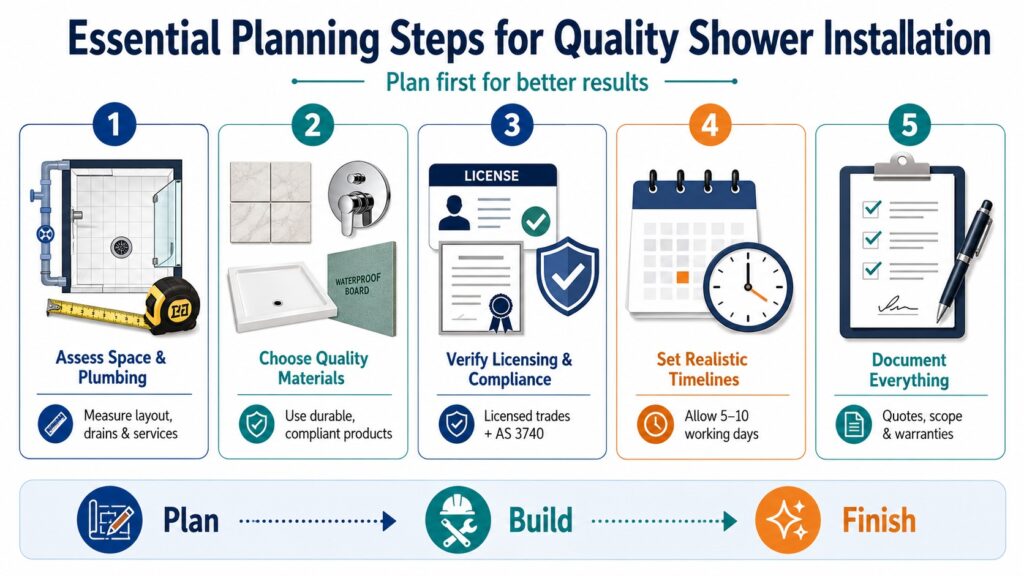
Quality starts before demolition begins. Proper planning identifies potential issues, aligns expectations, and ensures all materials and trades are ready when needed. Skipping this phase leads to delays, budget blowouts, and compromised results.
Assess Your Space and Plumbing Layout
Start by evaluating your existing bathroom layout and plumbing configuration. Measure the shower area carefully, noting the location of waste pipes, water supply lines, and electrical outlets. Check if your floor has adequate fall toward existing drains or if new drainage will need to be installed. Understanding these details upfront prevents surprises during construction.
Choose Quality Materials and Fixtures
Select shower bases, wall panels, tiles, and fixtures that meet Australian Standards for wet area applications. Look for waterproof foam board or cement board rated for continuous moisture exposure. Choose shower taps and mixers with ceramic disc cartridges for durability. Premium materials cost more initially but deliver better performance and longer service life than budget alternatives.
Verify Licensing and Compliance Requirements
Confirm that your installer holds current NSW Fair Trading licenses for plumbing and building work. Ask about their approach to waterproofing certification and building code compliance. All bathroom renovations in Sydney must meet AS 3740 waterproofing standards and local council requirements. Licensed professionals handle these obligations as part of their service.
Set Realistic Timelines and Expectations
A quality bathroom shower installation typically takes five to ten working days, depending on scope and complexity. This includes demolition, plumbing rough-in, waterproofing, tiling, fixture installation, and finishing. Rushed timelines compromise quality. Allow adequate time for each phase, including mandatory waterproofing cure periods before tiling can commence.
Document Everything in Writing
Get detailed quotes that itemize materials, labor, and compliance costs. Review plans and specifications before work starts. Confirm warranty coverage for both workmanship and products. Written documentation protects both parties and ensures everyone understands what’s included in the project scope.
Critical Waterproofing Standards for Shower Bases
Waterproofing is the single most important factor in a successful bathroom shower installation. It’s the invisible barrier that keeps water where it belongs and prevents structural damage. Poor waterproofing causes more bathroom failures than any other issue.
Australian Standard AS 3740 sets out specific requirements for wet area waterproofing. These include minimum membrane thickness, required overlap at joints, and vertical height requirements on walls. The standard also mandates specific treatment for penetrations like pipes, drains, and fixtures. Professional installers follow these specifications exactly.
The shower base must be waterproofed before any tiles or wall panels are installed. This involves applying a liquid or sheet membrane that creates a continuous barrier across the entire shower floor and up the walls to at least 150mm above the shower rose. All joints, corners, and penetrations receive additional reinforcement with waterproof tape or strips. The drain assembly must be properly sealed to the membrane using manufacturer-specified flanges and adhesives. Any gaps or incomplete coverage will eventually leak.
After waterproofing is complete, a flood test should be conducted. This involves blocking the drain, filling the shower base with water, and monitoring for leaks over 24 hours. Only after passing this test should tiling proceed. We conduct flood testing on every shower we install because it’s the only way to verify waterproofing integrity before covering it permanently.
How to Ensure Proper Drainage and Shower Base Installation
Even perfect waterproofing won’t prevent problems if water can’t drain properly. Pooling water leads to soap scum buildup, mold growth, and premature grout failure. Correct drainage requires precise shower base installation with the right slope and drain positioning.
1. Select a Pre-Sloped Shower Base or Build Custom Fall
Pre-sloped foam shower bases come with built-in drainage gradient and are easier to install consistently. Custom-built bases using mortar or screed require skilled tradespeople to achieve the correct 1:100 fall ratio toward the drain. Both approaches work when executed properly, but pre-sloped systems reduce installation variables.
2. Position the Drain Correctly
The drain should sit at the lowest point of the shower base, ideally centered or toward the back wall. Positioning it too close to the entry allows water to flow out onto the bathroom floor. Check that the drain assembly is level and securely fixed before waterproofing begins.
3. Create Adequate Slope Without Excessive Height
The shower base needs enough fall to drain effectively without creating an awkward step-up into the shower. Most installations achieve this with a 20-30mm slope from perimeter to drain. Excessive height differences create trip hazards and make the shower less accessible.
4. Seal Drain Connections Properly
The connection between the drain and waterproof membrane is a common failure point. Use the correct flange system specified by your membrane manufacturer. Apply sealant generously and ensure complete bonding between all components. This joint must be watertight before tiling.
5. Test Drainage Flow Before Tiling
Run water across the completed shower base to verify that it flows quickly toward the drain without pooling. Make adjustments to slope or drain height if needed. Once tiles are installed, fixing drainage issues becomes extremely difficult and expensive.
Selecting Durable Shower Fixtures and Fittings
The fixtures you choose affect both daily function and long-term maintenance. Quality shower taps, mixers, and accessories withstand constant use and moisture exposure without corroding, leaking, or failing prematurely. Cheap fixtures often need replacement within a few years, negating any initial savings.
Look for brass or stainless steel construction rather than chrome-plated plastic. Check that mixers use ceramic disc cartridges, which provide smooth operation and reliable shutoff for decades. Verify that all fixtures carry WELS ratings for water efficiency and meet Australian plumbing standards. Reputable brands back their products with substantial warranties, typically five to ten years for quality mixers and taps.
Shower niches and recesses should be properly waterproofed and sloped to prevent water accumulation. Pre-formed niche units simplify installation and reduce leak risk compared to site-built options. Position niches at a comfortable height, typically between 1200-1500mm from the floor, and ensure they’re large enough for your toiletries without protruding awkwardly.
Bathroom basins and vanities aren’t part of the shower itself but should be selected as part of your overall bathroom design. Coordinating finishes, styles, and quality levels creates a cohesive look and ensures all fixtures age gracefully together. We help clients select fixtures that balance aesthetics, function, and budget while meeting all performance requirements.
Common Bathroom Shower Installation Mistakes to Avoid
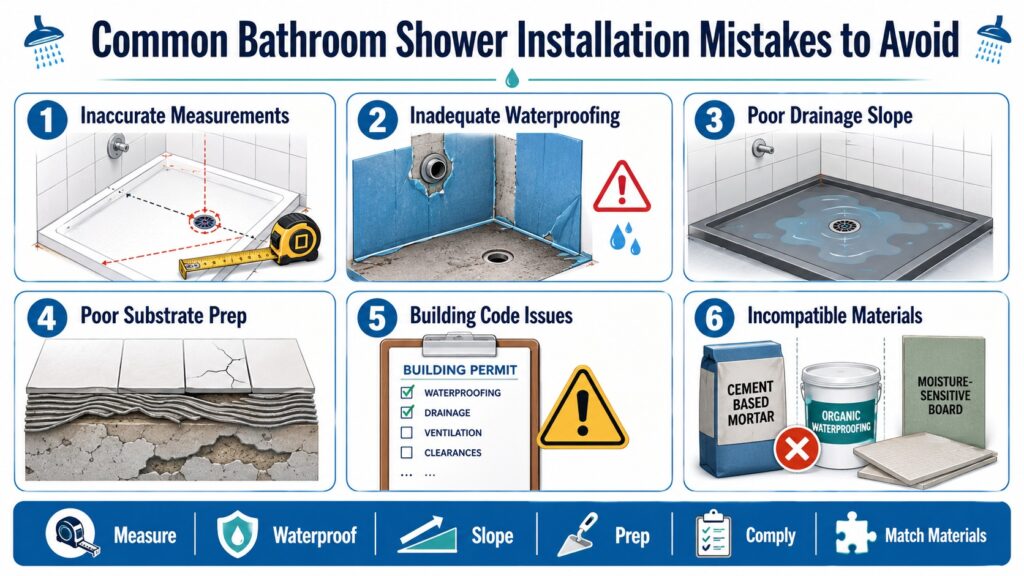
Even experienced renovators sometimes cut corners or overlook details that compromise quality. Being aware of these common mistakes helps you recognize substandard work and insist on proper methods. Prevention is always easier than repair.
- Inaccurate measurements: Failing to measure drain positions, wall dimensions, and fixture placements precisely leads to misaligned plumbing and poorly fitting components.
- Inadequate waterproofing: Skipping required membrane layers, missing corners and penetrations, or using non-compliant products guarantees future leaks.
- Ignoring drainage slope: Installing flat shower bases or incorrect fall angles causes water pooling, mold growth, and standing water issues.
- Poor substrate preparation: Tiling over unstable, uneven, or damaged surfaces leads to cracked tiles and failed adhesion within months.
- Overlooking building codes: Proceeding without proper permits or ignoring Australian Standards creates compliance issues and potential safety hazards.
- Using incompatible materials: Mixing products from different systems or using indoor-rated materials in wet areas causes premature failure.
We’ve corrected countless installations where these mistakes created serious problems. The fix almost always costs more than doing it right initially. Professional installation eliminates these risks through proper training, quality materials, and systematic compliance checks at every stage.
The Role of Licensed Trades in Quality Assurance
Licensed plumbers, builders, and waterproofers bring accountability and expertise that DIY approaches can’t match. Their qualifications represent years of training and demonstrated competence in their trades. When something goes wrong, licensed professionals carry insurance and are answerable to regulatory bodies.
Plumbing work must be completed by licensed plumbers who understand water supply systems, drainage requirements, and fixture installation standards. They ensure proper pipe sizing, secure connections, and compliant backflow prevention. Electrical work for heated towel rails, exhaust fans, or lighting requires a licensed electrician. Waterproofing certification can only be issued by qualified applicators who’ve completed approved training.
We maintain all required licenses and insurance for renovation work across Sydney. Our team includes qualified plumbers, builders, and waterproofers who work together to deliver compliant, quality installations. Every project receives proper documentation, including waterproofing certificates and compliance statements that satisfy building regulations and protect homeowners.
When to Choose Professional Renovation Services
Some homeowners have the skills and time to tackle bathroom projects themselves. Most don’t. Professional renovation services deliver better results faster, with less stress and guaranteed compliance. The question isn’t whether professionals do better work—they do—but whether the investment makes sense for your situation.
Complex projects involving plumbing changes, structural modifications, or full bathroom remodels benefit most from professional expertise. These renovations require multiple trades, careful sequencing, and thorough knowledge of building codes. Mistakes become expensive quickly, often costing more to fix than hiring professionals initially.
Even straightforward shower replacements involve waterproofing certification, plumbing connections, and tiling work that must meet Australian Standards. Professional installers complete these tasks efficiently because they do them regularly. They have the right tools, established supplier relationships, and systematic processes that ensure quality and compliance. We’ve completed hundreds of bathroom shower installations across Sydney’s Inner West, North Shore, Hills District, and beyond. Our streamlined approach minimizes disruption while delivering results that last. From initial consultation through final inspection, we handle every detail so you don’t have to.
How We Deliver Quality Bathroom Shower Installation
Our approach combines technical expertise, quality materials, and clear communication throughout every project. We don’t take shortcuts or compromise on standards because we know that quality installation prevents problems and protects our reputation. Every shower we install receives the same attention to detail, whether it’s a basic replacement or part of a luxury bathroom transformation.
The process starts with an onsite consultation where we assess your space, discuss your preferences, and identify any structural or plumbing considerations. We provide detailed quotes that itemize materials, labor, and compliance requirements so you understand exactly what’s included. Once you approve the plan, we schedule trades and order materials to ensure smooth workflow without delays.
During installation, we follow a systematic sequence: demolition and disposal, plumbing rough-in, waterproofing with certification, shower base installation, wall preparation, tiling, fixture fitting, and final finishing. Each phase is completed properly before moving to the next. We conduct quality checks at critical stages, including flood testing after waterproofing and flow testing after drain installation. Our licensed plumbers handle all plumbing connections, and qualified waterproofers apply and certify all wet area membranes. You receive all compliance documentation upon completion, including waterproofing certificates and warranty information. We stand behind our work with a comprehensive service guarantee because we’re confident in the quality we deliver.
If you’re planning a bathroom renovation or need a shower replacement, call 0466 334 065 or request a free onsite quote. We’ll assess your space, discuss your options, and provide clear pricing without pressure or hidden costs.
Your Shower Installation Checklist
Use this checklist to evaluate any bathroom shower installation, whether you’re hiring professionals or overseeing the work yourself. Quality installations consistently meet these standards at every stage.
- Detailed planning with accurate measurements and material specifications
- Licensed trades for all plumbing, electrical, and waterproofing work
- Compliant waterproofing applied to AS 3740 standards with certification
- Properly sloped shower base with secure, sealed drain connections
- Flood testing completed and passed before tiling begins
- Quality tiles, fixtures, and fittings from reputable manufacturers
- Professional tiling with consistent grout lines and proper adhesion
- Sealed penetrations, corners, and joints with appropriate sealants
- Drainage flow testing to confirm water moves quickly without pooling
- Final inspection and documentation including warranties and certificates
Every item on this list matters. Missing even one step compromises the installation and increases the risk of future problems. Professional installers follow these standards automatically because they’re part of proper trade practice and regulatory compliance.
Conclusion
Quality bathroom shower installation requires professional expertise, compliant materials, and systematic attention to detail. Proper waterproofing, precise drainage, and licensed trades eliminate the common failures that lead to leaks, mold, and costly repairs. Investing in quality installation protects your home and delivers decades of reliable performance.
Antons Renovation brings over 15 years of bathroom renovation expertise to every shower installation across Sydney. Our licensed team ensures precision, quality fixtures, and full compliance with Australian standards. Get started with a trusted local specialist today.
Related Articles
- 5 Common Mistakes in Bathroom Shower Repair to Avoid
- Top 5 Signs You Need Shower Tray Repair Before It’s Too Late
- Top Bathroom Shower Design Trends Homeowners Love
FAQs
What Are The Steps To Install A Shower?
To install a shower, first, you need to plan the layout and ensure proper plumbing access. Next, remove the existing fixtures and prepare the shower area. Then, install the shower base or pan, followed by the wall panels and plumbing fixtures. Finally, connect the water supply and drainage, seal the joints, and finish with any desired tiles or finishes. At Antons Renovation, our experienced team ensures every step is executed with precision and quality craftsmanship.
How Much Does It Cost To Install A Shower?
The cost to install a shower can vary widely based on factors such as the type of shower, materials used, and labor costs. Generally, you can expect to spend between $1,000 to $5,000 or more. At Antons Renovation, we provide tailored quotes that fit your budget and project requirements, ensuring transparency and value for your investment.
Do I Need A Permit To Install A Shower?
In most cases, a permit is required for shower installations, especially if plumbing work is involved. Regulations can vary by location, so it’s essential to check with local authorities. Our team at Antons Renovation is well-versed in local building codes and can handle all necessary permits to ensure compliance and peace of mind.
Can I Install A Shower Myself?
While it is possible to install a shower yourself, it requires a good understanding of plumbing and construction techniques. Improper installation can lead to leaks and other issues. For the best results, we recommend hiring professionals like Antons Renovation, who have over 15 years of experience ensuring high-quality installations.
What Type Of Shower Is Easiest To Install?
The easiest type of shower to install is often a prefabricated shower stall, as they come as a complete unit and require less plumbing work. However, for a custom look and optimal functionality, consider working with our team at Antons Renovation, who can design a shower that meets your specific needs and style preferences.
