
Bathroom shower repair might seem straightforward until water starts pooling on the floor or grout crumbles faster than expected. Many Sydney homeowners attempt DIY fixes only to face recurring leaks, mould growth, or complete system failures within months. These mistakes cost time, money, and peace of mind.
This article walks you through the five most common bathroom shower repair errors and how to avoid them. You’ll learn what goes wrong, why it matters, and how professional intervention saves you from expensive rework down the track.
Key Takeaways
- Skipping waterproofing compliance leads to structural damage and costly repairs.
- Using incorrect materials for wet areas accelerates wear and creates safety hazards.
- Improper installation of shower heads and fixtures causes leaks and water waste.
- Ignoring grout and sealant maintenance invites mould and moisture penetration.
- Overlooking drainage design results in standing water and long-term damage.
1. Skipping Proper Waterproofing in Bathroom Shower Repair
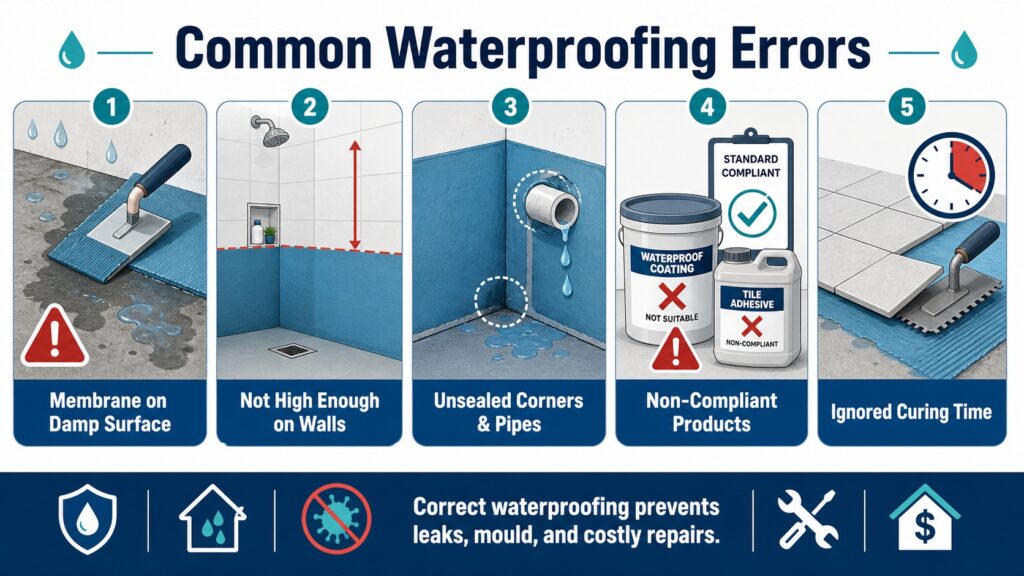
Waterproofing is the invisible shield that keeps water inside your shower and away from walls, floors, and structural timber. When this step gets rushed or skipped entirely, moisture seeps into places it shouldn’t go. You might not notice the damage for months, but by then, rot and mould have already taken hold.
Many homeowners assume that tiles alone keep water out. They don’t. Tiles are porous, and grout is even more so.
Without a waterproof membrane beneath the surface, water travels through grout lines and into the substrate. This leads to swelling, cracking, and eventual failure of the entire shower enclosure.
Why Waterproofing Compliance Matters
In New South Wales, waterproofing must meet Australian Standard AS 3740. This standard sets out clear requirements for wet area preparation, membrane application, and testing. Licensed professionals understand these rules and apply them to every job.
Cutting corners here doesn’t just risk your bathroom. It can void insurance claims if water damage spreads to other rooms or floors below.
We’ve seen properties where DIY waterproofing failed within a year. The repair bill included replacing subfloors, re-tiling, and treating mould throughout adjacent rooms.
Common Waterproofing Errors
- Applying membrane over damp surfaces instead of fully dried substrates
- Failing to extend waterproofing up walls to the required height
- Skipping corner and penetration sealing around pipes and fixtures
- Using non-compliant products that don’t meet AS 3740 standards
- Ignoring manufacturer curing times before tiling over membranes
At Anton’s Renovation, we treat waterproofing as the foundation of every bathroom shower repair project. Our team applies compliant membranes, tests for leaks, and provides certification that protects your investment and meets building regulations.
2. Choosing the Wrong Materials for Wet Areas
Not every tile, adhesive, or grout works in a shower. Wet areas demand materials designed to handle constant moisture, temperature shifts, and cleaning chemicals. Using the wrong products shortens the lifespan of your repair and creates ongoing maintenance headaches.
Some homeowners pick tiles based solely on appearance. They choose glossy ceramic or natural stone without checking slip ratings or porosity levels. Within months, the surface becomes dangerously slippery or stains from soap scum and hard water.
Material Selection Mistakes
Glossy tiles look elegant but often lack the texture needed for safe footing in a wet shower. Slip-resistant tiles carry a rating of P4 or P5 for wet barefoot areas. Always check this rating before purchasing.
Natural stone like marble or travertine requires sealing and regular maintenance. Without proper treatment, these materials absorb water and develop mould or discolouration. Engineered stone or porcelain tiles offer similar aesthetics with far less upkeep.
Adhesives and grouts also vary widely. Standard wall adhesive won’t hold up in a shower. You need flexible, waterproof adhesive that accommodates movement and moisture. Epoxy grout resists mould better than cement-based options, especially in grout lines less than 3mm wide.
How We Choose Materials
Our team sources tiles, adhesives, and sealants from trusted suppliers who specialise in wet area products. We explain the trade-offs between different materials so you can make informed decisions. Whether you prefer the low-maintenance appeal of porcelain or the natural look of wood-effect tiles, we match materials to your lifestyle and budget.
We also factor in long-term performance. A slightly higher upfront investment in quality materials saves you from premature replacement and ongoing repairs.
3. Improper Installation of Shower Heads and Fixtures
A poorly installed shower head doesn’t just drip. It wastes water, reduces pressure, and can cause hidden leaks inside walls. Many DIY repairs focus on surface-level fixes without addressing the root cause of fixture failures.
Shower heads connect to pipework through threaded fittings and seals. If these connections aren’t tightened correctly or sealed with the right tape, water escapes. Over time, this moisture damages plasterboard, timber frames, and insulation.
You might be wondering why a simple shower head replacement needs professional attention. The answer lies in what you can’t see. Wall cavities hide pipework that may already be corroded, loose, or misaligned. Tightening a new shower head onto damaged threads only makes the problem worse.
4. Ignoring Grout and Sealant Maintenance
Grout and sealant are the unsung heroes of bathroom shower repair. These materials fill gaps, prevent water penetration, and keep your shower looking clean. When they fail, water finds its way into places it shouldn’t be.
Grout deteriorates over time. It cracks, crumbles, and develops gaps that let moisture through. Sealant around shower hobs, corners, and fixture penetrations also degrades. UV exposure, cleaning chemicals, and constant water contact all contribute to breakdown.
Many homeowners ignore these early warning signs. They assume a bit of discolouration or a small gap won’t cause harm. By the time leaks become obvious, the damage has already spread.
5. Overlooking Drainage Design in Bathroom Shower Repair
Drainage design plays a major role in how well a shower performs after repair or renovation. When water does not flow efficiently toward the drain, it can pool on the floor, increase slip risks, encourage mould growth, and gradually damage nearby surfaces. This is why proper drainage planning should never be overlooked in bathroom shower repair, especially in older homes or updated shower layouts.
| Drainage Type | Best For | Capacity | Maintenance |
|---|---|---|---|
| Central Round Grate | Standard showers | Moderate | Easy access |
| Linear Drain | Doorless showers | High | Simple cleaning |
| Corner Drain | Compact spaces | Moderate | Requires care |
| Tile Insert Drain | Seamless design | High | Specialist cleaning |
A well-designed drainage system depends on the right combination of floor slope, grate type, and pipe capacity to move water away efficiently. Choosing the wrong setup can lead to standing water, overflow, and long-term moisture issues that affect the rest of the bathroom. By understanding the differences between drainage types, homeowners can make better decisions during shower repairs and avoid performance problems later.
Avoiding Future Bathroom Shower Repair Problems
Preventing shower problems is often easier and more affordable than dealing with major repairs after damage has already occurred. Small issues such as cracked grout, blocked drains, or dripping fixtures can quickly lead to water damage, mould growth, and more expensive bathroom repairs if they are ignored. Following a few simple maintenance habits can help keep your shower in better condition and reduce the risk of future repair problems.
- Wipe down tiles and glass after each use to reduce soap scum, water spots, and mineral buildup.
- Check grout and sealant every few months for cracks, gaps, or areas where the seal has started to pull away.
- Clean drains monthly to remove hair, soap residue, and debris before they create blockages.
- Use a drain cover to catch material before it enters the plumbing system.
- Test shower heads and fixtures for leaks so worn washers, seals, or damaged threads can be addressed early.
Consistent maintenance helps protect the waterproofing, drainage, and surface finishes that keep your shower working properly. These small preventative steps can make a noticeable difference in reducing long-term wear and avoiding bigger repair bills later. By staying proactive with shower care, homeowners can extend the life of their bathroom and avoid many common repair issues.
Why Professional Bathroom Shower Repair Matters
DIY repairs can work for minor issues like replacing a shower caddy or updating shower steamers. But structural problems, waterproofing failures, and plumbing leaks require licensed expertise. Mistakes in these areas cost far more to fix than the original repair would have.
Professional renovators bring knowledge of building codes, material science, and installation techniques. They spot problems early and address root causes, not just symptoms. This approach saves money and extends the life of your bathroom.
At Anton’s Renovation, we’ve spent over 15 years refining our bathroom shower repair process. We handle everything from minor fixture updates to complete shower rebuilds. Our team works across Sydney, including the Inner West, North Shore, and Hills District.
We use premium materials, comply with all NSW building standards, and back our work with a service guarantee. Every project starts with a free onsite consultation where we assess your needs, explain your options, and provide clear timelines.
Conclusion
Bathroom shower repair demands attention to detail, quality materials, and compliance with building standards. Skipping waterproofing, using incorrect materials, installing fixtures improperly, neglecting grout maintenance, and overlooking drainage design all lead to costly failures. Professional expertise prevents these mistakes and delivers showers that perform reliably for years.
Antons Renovation brings over 15 years of bathroom renovation expertise to every Sydney project. We help homeowners avoid costly shower repair mistakes through proper planning and quality workmanship. Get started with a trusted local team today.
Related Articles
- Top 5 Signs You Need Shower Tray Repair Before It’s Too Late
- Shower Base Repair Tips to Extend the Life of Your Bathroom
- How to Ensure Quality in Your Bathroom Shower Installation
FAQs
What Are Common Bathroom Shower Problems?
Common bathroom shower problems include leaking faucets, clogged drains, low water pressure, mold and mildew buildup, and cracked tiles. At Antons Renovation, we understand these issues well and can provide effective solutions tailored to your specific needs.
How Do You Fix A Leaking Shower?
To fix a leaking shower, start by identifying the source of the leak, which could be a worn-out washer, loose fixtures, or damaged tiles. Depending on the issue, you may need to replace parts or reseal joints. Our experienced team at Antons Renovation can handle such repairs efficiently, ensuring a long-lasting solution.
What Tools Do I Need For Shower Repair?
Essential tools for shower repair typically include a wrench, screwdriver, caulking gun, pliers, and a utility knife. Having these tools on hand can help facilitate DIY repairs, but for a professional finish, consider enlisting our skilled team at Antons Renovation.
How Much Does It Cost To Repair A Shower?
The cost to repair a shower can vary widely based on the nature of the issue and materials needed. Generally, minor repairs may range from $100 to $300, while more extensive work could exceed $1,000. At Antons Renovation, we offer transparent pricing and customized solutions to fit your budget.
Can I Repair My Shower Myself?
While some shower repairs can be managed by DIY enthusiasts, others may require professional expertise to ensure a proper fix and prevent future issues. At Antons Renovation, our team is always ready to assist, providing reliable and quality service for any shower repair you may need.
