
Grout deteriorates faster than tile in any home. Cracked or stained grout lines allow water penetration that damages subfloors and framing. Fresh grout restores waterproofing, prevents costly structural repairs, and keeps your bathroom or kitchen looking pristine for years.
This article explains how regrouting preserves home value, when to refresh grout, and what professional restoration involves. You will learn practical signs of grout failure, the difference between DIY fixes and licensed work, and why timely maintenance saves thousands in replacement costs.
Key Takeaways
- Grout wears out before tiles, making regrouting a cost-effective way to extend tiled surface life.
- Water seepage through damaged grout causes mold, structural rot, and expensive subfloor replacement.
- Professional regrouting includes proper removal, curing, and sealing that DIY methods often miss.
- Regular grout maintenance protects property value and prevents emergency renovations.
- Licensed renovators ensure compliance with Australian waterproofing standards for lasting results.
Understanding Why Tile Regrouting Protects Your Investment
Tiles in bathrooms and kitchens outlast the grout between them by years. Grout seams absorb moisture, collect soap residue, and crack under foot traffic. When grout fails, water travels beneath tiles and compromises the substrate, leading to loose tiles, mold growth, and structural damage that costs far more than preventive regrouting.
Homeowners often overlook grout until discoloration or crumbling becomes obvious. By that stage, water may have already reached timber framing or plasterboard. Professional tile regrouting removes compromised material and applies fresh grout that cures properly, restoring the waterproof barrier and preventing hidden deterioration.
Property buyers notice grout condition during inspections. Stained or missing grout signals neglect and raises questions about hidden water damage. Fresh, sealed grout conveys meticulous maintenance and reassures buyers that wet areas meet Australian building standards.
How Grout Failure Accelerates Structural Damage
Cracked grout lets water migrate into wall cavities and under floor tiles. Moisture trapped in these spaces promotes mold spores and wood rot. In severe cases, you face subfloor replacement, wall reframing, and extensive waterproofing repairs that can exceed the cost of a full bathroom renovation.
Expansion joints, required in all tile installations, accommodate building movement and temperature changes. Deteriorated grout in these joints allows uncontrolled flexing that cracks tiles and loosens adhesive bonds. Regrouting restores joint function and prevents tile breakage.
The Link Between Grout Condition and Property Valuation
Real estate appraisers and buyers assess bathroom and kitchen condition closely. Clean, intact grout lines suggest regular upkeep and reduce perceived maintenance risk. Homes with well-maintained tiled areas command higher sale prices and spend less time on the market.
Regrouting costs a fraction of retiling but delivers a similar visual refresh. Buyers see a modern, cared-for space rather than a renovation project. This perception directly influences offers and negotiation leverage.
Tile Regrouting Sydney Homeowners Use to Protect Wet Areas
For many homeowners, tile regrouting Sydney services are not just about improving appearance. Regrouting is often one of the most practical ways to protect bathrooms, kitchens, and other tiled areas from hidden moisture damage before larger repairs become necessary. When grout begins to crack, crumble, or absorb staining, it stops doing its job properly, which is why many people start looking into tile cleaning and regrouting or broader tile and grout restoration options before the problem spreads.
In Sydney homes, grout failure is especially common in wet areas exposed to constant steam, splashing, and cleaning chemicals. This is why searches for grout Sydney or grout guys Sydney often come from homeowners who have noticed mould returning, water sitting in grout lines, or tiled surfaces starting to look tired even after cleaning. In many cases, the issue is not the tile itself but the grout system around it, which means regrouting can restore both the finish and the protective performance of the surface without requiring full replacement.
When completed properly, regrouting extends the life of existing tiles and supports the long-term condition of the room. It can also improve presentation significantly, which matters for homeowners preparing a property for sale or simply wanting to maintain a cleaner, better-kept home. That is why regrouting is often seen as both a maintenance measure and a value-protecting upgrade.
Why Professional Tile and Grout Restoration Delivers Better Long-Term Value
Homeowners often compare providers by searching terms like tile and grout professionals, best regrouting company, or location-based names such as Tile Rescue Leichhardt when trying to decide who to trust with the work. These searches make sense because grout restoration can look simple from the outside, but the durability of the result depends heavily on correct grout removal depth, surface preparation, material choice, curing time, and sealing.
This is where professional tile and grout restoration differs from a cosmetic touch-up. A proper regrouting job should not just make the tiled area look cleaner. It should restore the integrity of the joints, reduce moisture penetration, and help prevent recurring staining, mould, and tile loosening. If old grout is only patched at the surface, the improvement may be short-lived and the underlying issue can continue.
For homeowners, the better long-term value often comes from choosing experienced professionals who can assess whether regrouting alone is enough or whether the tiled area also needs sealing, repairs, or broader waterproofing attention. That is what turns a simple maintenance task into a meaningful way to protect the home and avoid bigger costs later.
Recognizing the Warning Signs That Demand Professional Tile Regrouting
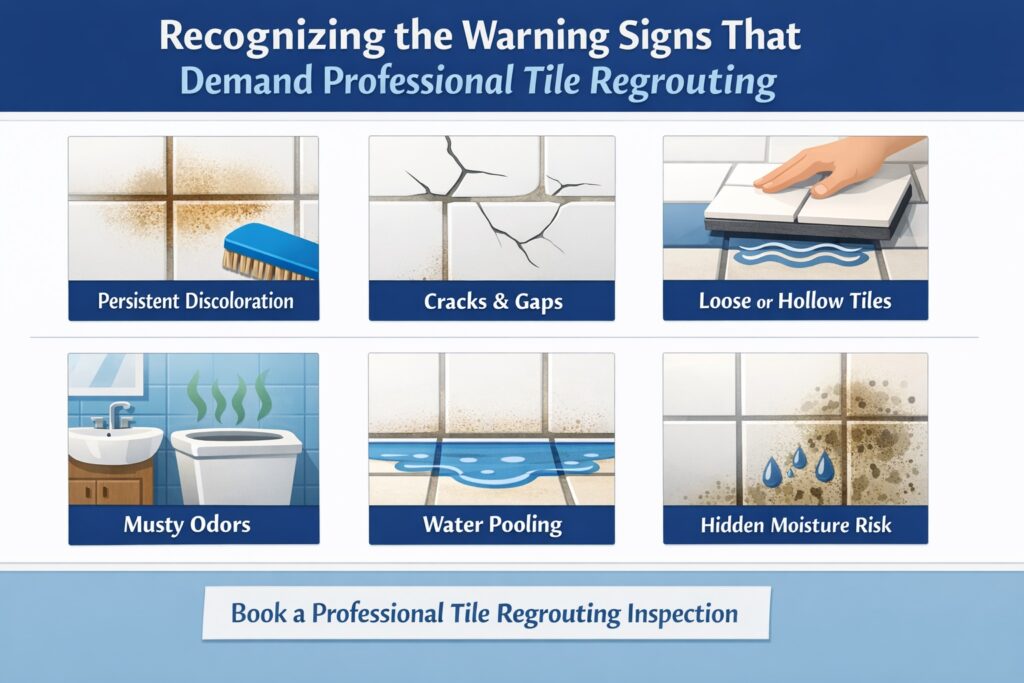
Grout shows distress through visible cues and performance failures. Catching these early prevents water damage and keeps repair costs manageable. Homeowners who monitor grout condition schedule regrouting before tiles loosen or mold spreads.
Some warning signs appear subtle at first. Discoloration may seem cosmetic, but it often indicates moisture retention and mildew colonization. Crumbling grout edges signal bond failure and imminent water infiltration.
- Persistent discoloration despite cleaning: Grout that remains stained after scrubbing has absorbed contaminants deep into its porous structure, requiring removal and replacement.
- Visible cracks or gaps in grout lines: Even hairline cracks allow water penetration and expand over time, compromising the entire tiled surface.
- Loose or hollow-sounding tiles: Tiles that move underfoot or sound hollow when tapped indicate adhesive failure caused by water seepage through grout.
- Musty odors in bathrooms or kitchens: Persistent damp smells suggest mold growth behind tiles, often originating from failed grout seals.
- Water pooling along grout lines after showering: Grout should absorb minimal water when sealed properly; pooling indicates seal breakdown and porous grout.
Professional assessment identifies issues that casual inspection misses. Licensed renovators check grout depth, adhesion quality, and substrate condition to determine whether regrouting alone suffices or whether tile removal and waterproofing renewal are necessary.
Addressing Common Misconceptions About Tile Regrouting
Many homeowners believe grout discoloration is purely cosmetic. While staining affects appearance, it often indicates deeper issues like moisture retention and mildew colonization. Addressing discoloration through regrouting prevents progression to structural damage.
Another misconception holds that regrouting is a temporary fix. When performed correctly with quality materials and proper sealing, regrouting lasts years and provides waterproofing comparable to new installations. Skipping professional standards leads to short-lived results that reinforce the temporary-fix myth.
Some assume all grout performs identically. In reality, grout formulations vary widely in strength, flexibility, water resistance, and stain resistance. Professionals match grout type to tile material, installation location, and traffic levels. Mismatched grout fails prematurely regardless of application quality.
What Professional Tile Regrouting Involves and Why It Matters
Licensed regrouting follows a systematic process that ensures durability and compliance. Professionals remove old grout to the correct depth without damaging tile edges. They clean substrates thoroughly, apply grout that matches tile thickness and movement requirements, and seal surfaces to resist moisture and staining.
Complete Removal of Deteriorated Grout
Renovators use oscillating tools and grout saws to remove old material without chipping tile edges. They clear grout to a depth that allows new grout to bond securely to substrate and tile sides. Partial removal leaves weak layers that fail within months.
Surface Preparation and Cleaning
Dust, soap scum, and mildew residue prevent grout adhesion. Professionals vacuum grout channels and apply cleaning agents that neutralize contaminants. Dry, clean surfaces ensure maximum bond strength and prevent future discoloration.
Grout Application Matching Tile Specifications
Grout type must match tile material and installation location. Epoxy grout suits high-moisture areas like shower floors, while cement-based grout works for kitchen backsplashes. Professionals select products that meet Australian standards for slip resistance and water absorption.
Proper Curing Under Controlled Conditions
Grout requires specific humidity and temperature ranges to cure correctly. Professionals protect freshly grouted areas from premature water exposure and maintain ventilation. Full curing takes 48 to 72 hours, depending on grout type and environmental conditions.
Sealing to Prevent Water Penetration and Staining
Unsealed grout absorbs water, oils, and pigments that cause discoloration and mold growth. High-quality bathroom tile sealer penetrates grout pores and creates a hydrophobic barrier. Professionals apply sealer after curing completes and reapply periodically to maintain protection.
This process matters because every stage contributes to the lifespan and performance of the finished surface. Skipping proper removal, preparation, curing, or sealing can lead to cracking, poor bonding, and recurring moisture problems. Professional regrouting helps ensure the tiled area stays clean, durable, and better protected for the long term.
Maintaining Regrouted Surfaces to Maximize Lifespan and Home Value
Fresh grout requires ongoing care to maintain appearance and waterproofing. Regular cleaning prevents soap scum buildup that harbors mildew. Periodic resealing protects grout from moisture absorption and staining. Simple maintenance extends grout life and delays the need for future regrouting.
High-traffic bathrooms and commercial kitchens need more frequent sealing than guest bathrooms or laundry areas. Professionals recommend resealing once or twice per year for heavily used spaces. This schedule maintains hydrophobic properties and prevents discoloration.
You might be wondering whether resealing is a DIY task. Applying sealer is straightforward, but surface preparation and product selection require knowledge. Professionals clean grout thoroughly before sealing and choose products compatible with existing grout type. Improper sealer application traps moisture and causes grout deterioration.
Comparing DIY Tile Regrouting With Licensed Professional Work
DIY tile regrouting may seem like a cost-saving option, but the results often depend on skill, product choice, and attention to detail. While the process appears simple on the surface, poor workmanship can lead to weak bonding, uneven joints, and moisture problems that are expensive to fix later. Comparing DIY work with licensed professional regrouting helps homeowners understand the difference in durability, speed, and long-term value.
| Aspect | DIY Regrouting | Professional Regrouting |
|---|---|---|
| Grout Removal Depth | Often inconsistent or shallow | Uniform depth ensuring strong bond |
| Material Selection | Generic retail products | Trade-grade grout and sealer |
| Curing Compliance | Frequently rushed or skipped | Monitored per manufacturer specs |
| Waterproofing Verification | Not assessed | Checked and documented |
| Warranty Coverage | None | Service guarantee included |
| Time to Completion | Days to weeks | One to two days |
Professional regrouting offers more consistent results because it combines proper preparation, quality materials, and experienced application. It also reduces the risk of repeat work, tile damage, and hidden water intrusion that can develop after poor DIY repairs. In the long run, licensed professional work often provides better protection for your tiled surfaces and better value for your investment.
Why Sydney Homeowners Choose Anton’s Renovation for Tile Regrouting
We bring over 15 years of renovation experience to every tile regrouting project. Our licensed team understands Sydney building codes, substrate conditions in heritage homes, and moisture challenges in coastal areas. We complete regrouting with minimal disruption and provide clear timelines from initial assessment through final sealing.
Our process begins with an onsite consultation where we assess grout condition, tile type, and waterproofing integrity. We explain what work your project needs and provide a fixed-rate quote with no hidden costs. Transparency matters to us, and we document every step for your records.
Regrouting integrates seamlessly with broader bathroom renovations, kitchen upgrades, and accessibility modifications. If your tiles remain sound but grout has failed, regrouting delivers a fresh appearance at a fraction of retiling costs. We help you make informed decisions that align with your budget and home improvement goals.
Conclusion
Grout condition directly impacts home value, structural integrity, and daily comfort. Timely regrouting prevents water damage, maintains visual appeal, and demonstrates property stewardship that buyers reward. Professional work ensures compliance, durability, and peace of mind that DIY efforts cannot match.
Antons Renovation delivers expert bathroom and kitchen upgrades that protect your investment. Our licensed team ensures every detail lasts. Get started on your renovation today.
Related Articles
- 5 Common Mistakes to Avoid When Regrouting Shower
- Top 5 Benefits of Professional Regrouting for Your Home
- Bathroom Sealing vs Regrouting: What’s the Difference?
FAQs
What Is Tile Regrouting?
Tile regrouting is the process of removing old grout from between tiles and replacing it with fresh grout. This not only enhances the appearance of your tiled surfaces but also helps prevent moisture damage and mold growth, ensuring lasting value for your home.
How Often Should You Regrout Tile?
It is generally recommended to regrout tile every 5 to 10 years, depending on the wear and tear, location, and quality of the original grout. Regular maintenance can help preserve the beauty and functionality of your tiled areas.
Can You Regrout Over Old Grout?
While it is possible to regrout over old grout, it is usually best to remove the old grout first. This allows for better adhesion and a more durable finish, ensuring your renovation is as long-lasting as possible.
Is Regrouting Tile Difficult?
Regrouting tile can be a labor-intensive task that requires precision and attention to detail. For optimal results, it’s advisable to hire a professional with experience, like our skilled team at Antons Renovation, to ensure a seamless and effective process.
How Much Does It Cost to Regrout Tile?
The cost to regrout tile varies based on the size of the area and the type of grout used. Typically, homeowners can expect to invest in quality materials and craftsmanship to ensure lasting results, which is something we at Antons Renovation prioritize in every project.
How Much Is Tile Regrouting Sydney Cost?
Tile regrouting Sydney cost depends on the size of the area, the condition of the existing grout, and whether the job involves a bathroom, kitchen, or shower. For example, shower tile regrouting Sydney and bathroom tile regrouting Sydney may cost more if there is moisture damage or mould that needs extra preparation. At Antons Renovation, we provide clear, upfront pricing and high-quality workmanship to ensure long-lasting results.
Do You Offer Shower, Bathroom, And Kitchen Tile Regrouting In Sydney?
Yes, Antons Renovation specialises in shower tile regrouting Sydney, bathroom tile regrouting Sydney, and kitchen tile regrouting Sydney. Our experienced team delivers precise, durable finishes that restore the look of your tiles while protecting your surfaces from future damage, making us a trusted choice for professional tile regrouting services across Sydney.
