
Your bathroom grout looks tired and stained. You wonder whether sealing or regrouting will fix it. Both methods address grout problems, but they work in very different ways and suit different situations.
This article explains bathroom sealing vs regrouting in plain language. You’ll learn when each method works best, what each process involves, and how to choose the right solution for your Sydney home.
Key Takeaways
- Sealing protects existing grout from moisture and stains without removing it.
- Regrouting removes old grout completely and installs fresh material.
- Sealing costs less and takes less time than regrouting.
- Regrouting lasts longer and fixes structural grout damage.
- Professional assessment determines which method suits your bathroom best.
What Is Bathroom Sealing and How Does It Work?
Bathroom sealing applies a protective coating over existing grout lines. The sealer penetrates porous grout and creates a barrier against water, soap, and dirt. This process doesn’t remove or replace your grout—it simply shields what’s already there.
Penetrating sealers absorb into the grout surface. They bond with the material at a microscopic level. Surface sealers form a protective film on top of the grout.
Sealing bathroom tiles makes sense when your grout still looks intact but shows early signs of discoloration. The process takes a few hours and requires minimal disruption. You clean the grout thoroughly, let it dry, then apply the sealer with a brush or applicator.
Most modern sealers cure within 24 to 48 hours. After that, your grout resists moisture and stays cleaner between deep cleans. Bathroom floor sealing extends the life of your grout by preventing water from soaking in and causing mold or mildew.
Professional grout sealing uses high-grade products that last longer than retail options. We apply sealers evenly and ensure proper curing, which gives you better protection and longer-lasting results.
What Is Regrouting and When Do You Need It?
Regrouting means removing all the old grout from between your tiles and installing new grout. This process addresses grout that has cracked, crumbled, or failed completely. You need regrouting when sealing won’t fix the underlying damage.
The regrouting process starts with grinding out the old grout using a grout saw or rotary tool. Once the joints are clear, you clean the area and apply fresh grout. After the grout cures, you seal it to protect your investment.
Regrouting takes more time and creates more mess than sealing. Dust and debris are part of the process. But the results last much longer—typically eight to ten years with proper maintenance.
You might be wondering when regrouting becomes necessary. Cracked grout lines, missing chunks, or persistent mold that returns after cleaning all signal that sealing won’t be enough. Water damage behind tiles also requires regrouting to prevent structural issues.
Our team assesses your grout condition before recommending a solution. If your grout has failed in multiple areas, regrouting restores both function and appearance. We use premium grout materials and ensure proper waterproofing compliance, which matters in Sydney’s humid climate.
Bathroom Sealing vs Regrouting: Key Differences
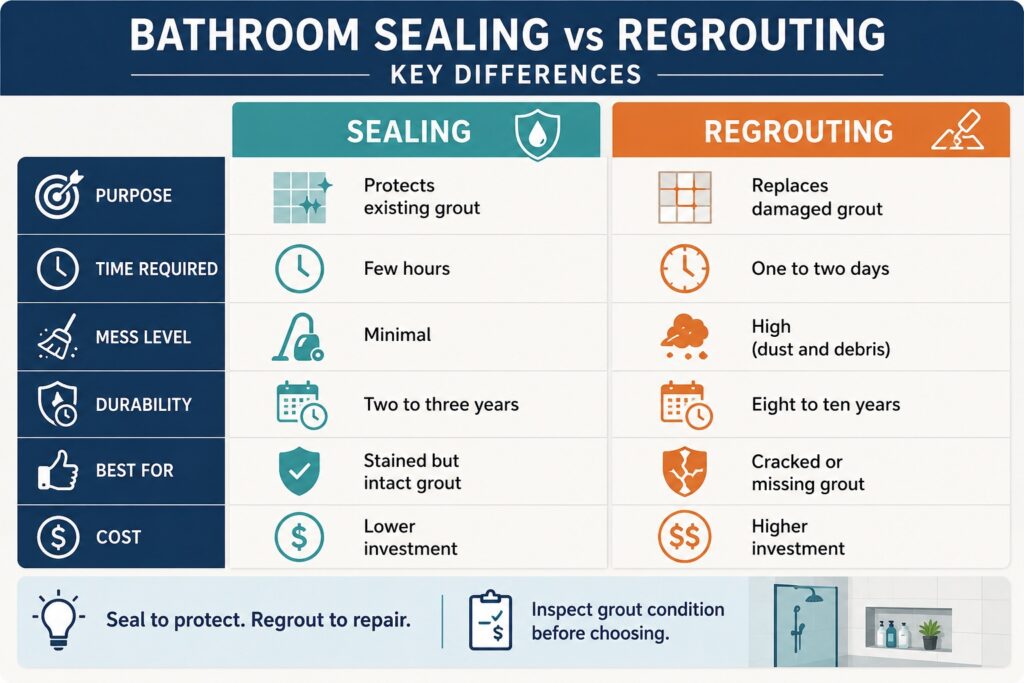
Understanding the core differences helps you choose the right fix. Sealing and regrouting serve different purposes and suit different situations. Here’s a clear comparison of how they differ in cost, time, durability, and application.
| Factor | Sealing | Regrouting |
|---|---|---|
| Purpose | Protects existing grout | Replaces damaged grout |
| Time Required | Few hours | One to two days |
| Mess Level | Minimal | High (dust and debris) |
| Durability | Two to three years | Eight to ten years |
| Best For | Stained but intact grout | Cracked or missing grout |
Sealing works best as a preventive measure. If your grout looks dull or slightly stained but remains structurally sound, sealing restores its appearance and adds protection. This approach saves time and reduces disruption.
Regrouting becomes necessary when grout has deteriorated. Cracks allow water to seep behind tiles, which leads to mold growth and tile loosening. Regrouting fixes these problems at the source.
Cost varies based on project scope. Sealing typically costs less because it requires less labor and fewer materials. Regrouting involves more intensive work, which means higher costs, but the long-term benefits outweigh the initial investment.
Choosing between bathroom sealing vs regrouting depends on your grout’s condition. Our renovators inspect your bathroom and recommend the most effective solution. We don’t push unnecessary work—we guide you based on what your space actually needs.
When to Choose Sealing Over Regrouting
Sealing makes sense when your grout still performs its job but looks tired. You want to prevent future damage without the hassle of a full regrout. Here are situations where sealing is the right choice.
1. Grout Shows Minor Staining
Light discoloration from soap scum or hard water doesn’t require regrouting. A deep clean followed by sealing restores the grout’s appearance. The sealer prevents new stains from setting in.
2. Grout Remains Structurally Intact
If your grout has no cracks or missing sections, sealing extends its life. You protect what’s already working well. This approach saves money and time.
3. You Want Quick Results
Sealing takes a few hours, not days. You can use your bathroom again within 24 to 48 hours. This speed suits busy households or rental properties with tight turnaround times.
4. Budget Constraints Exist
Sealing costs less than regrouting. If your grout doesn’t need replacement, sealing delivers solid value. You get protection without the expense of full grout removal.
5. Preventive Maintenance Is Your Goal
Sealing new grout after installation prevents future problems. Many homeowners skip this step, which leads to premature grout failure. Sealing bathroom tiles right from the start keeps grout looking fresh longer.
Our team applies professional-grade sealers that outlast retail products. We ensure even coverage and proper curing, which maximizes protection. If you’re unsure whether sealing suits your situation, we assess your grout and provide honest recommendations.
When Regrouting Becomes Necessary
Regrouting addresses problems that sealing can’t fix. When grout has failed, you need a complete replacement to restore function and prevent further damage. Here are clear signs that regrouting is your best option.
1. Grout Has Cracked or Crumbled
Cracks let water penetrate behind tiles. This moisture causes mold, mildew, and tile loosening. Sealing over cracked grout doesn’t solve the problem—it just hides it temporarily.
2. Grout Is Missing in Sections
Gaps between tiles expose the substrate to water. Missing grout compromises waterproofing and tile stability. Regrouting fills these gaps and restores protection.
3. Persistent Mold Returns After Cleaning
Mold that keeps coming back often lives deep in the grout. Surface cleaning and sealing won’t eliminate it. Regrouting removes the contaminated material and starts fresh.
4. Grout Has Changed Color Permanently
Deep stains that won’t lift with cleaning indicate that the grout has absorbed too much moisture and dirt. Regrouting gives you a clean slate and a uniform appearance.
5. Tiles Feel Loose or Shift Slightly
Loose tiles often result from grout failure. Water seeps behind the tiles and weakens the adhesive. Regrouting stabilizes the tiles and prevents further damage.
6. Your Bathroom Is Eight to Ten Years Old
Grout has a typical lifespan of eight to ten years. If your bathroom hasn’t been regrouted in that time, it’s likely due. Proactive regrouting prevents bigger problems down the line.
We handle regrouting projects across Sydney, from compact Inner West bathrooms to spacious North Shore ensuites. Our process includes proper grout removal, thorough cleaning, and high-quality grout application. We also ensure waterproofing compliance, which protects your investment and meets Australian building standards.
Comparing Durability: Sealing vs Regrouting
Durability matters when you’re deciding between sealing and regrouting. You want a solution that lasts and protects your bathroom over time. Here’s how the two methods compare in terms of longevity and performance.
Sealing typically lasts two to three years. The exact lifespan depends on the sealer quality, bathroom usage, and maintenance. High-traffic bathrooms or showers used multiple times daily wear through sealers faster than guest bathrooms.
Regrouting lasts eight to ten years when done correctly. Fresh grout restores structural integrity and provides a solid foundation. After regrouting, you should seal the new grout to maximize its lifespan.
Sealing requires periodic reapplication. You’ll need to reseal every few years to maintain protection. This ongoing maintenance keeps costs manageable and prevents grout deterioration.
Regrouting is a one-time fix for many years. The upfront investment is higher, but you won’t need to regrout again for nearly a decade. This makes regrouting more economical in the long run if your grout has already failed.
Environmental factors also affect durability. Sydney’s humidity accelerates grout wear. Bathrooms with poor ventilation or frequent water exposure see faster grout breakdown. Proper ventilation and regular cleaning extend the life of both sealing and regrouting.
Our renovators use premium materials that stand up to Sydney’s climate. We recommend the right solution based on your bathroom’s condition and your long-term goals. Whether you choose sealing or regrouting, we ensure the work lasts.
How Antons Renovation Handles Bathroom Sealing and Regrouting
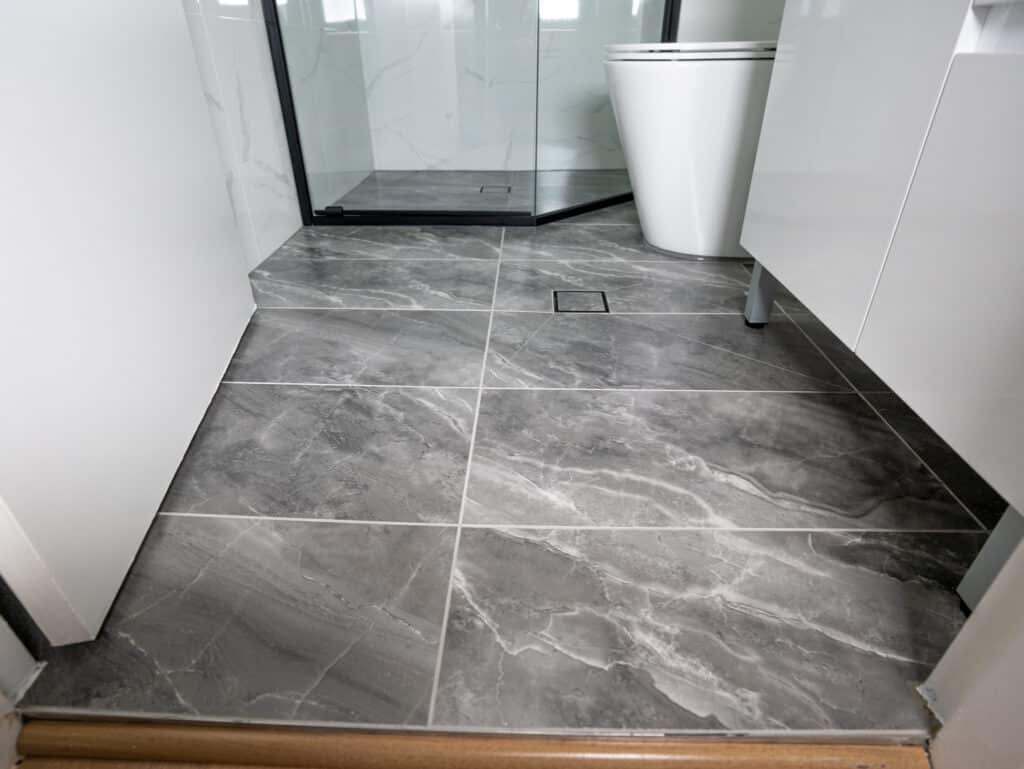
We approach every bathroom project with attention to detail and a focus on lasting results. Whether you need sealing or regrouting, our process ensures quality workmanship and compliance with Australian standards.
Our process starts with a free onsite assessment. We inspect your grout, check for water damage, and discuss your goals. This consultation helps us recommend the best solution—sealing, regrouting, or a combination of both.
For sealing projects, we deep clean the grout to remove all dirt, soap scum, and mold. We let the grout dry completely before applying a premium penetrating sealer. This preparation ensures the sealer bonds properly and provides maximum protection.
For regrouting, we carefully remove the old grout without damaging your tiles. We clean the joints thoroughly and check the substrate for water damage. If we find issues, we address them before applying new grout. After the grout cures, we seal it to protect your investment.
We use high-quality materials from trusted suppliers. Our grout and sealers stand up to Sydney’s humidity and daily bathroom use. We also ensure all work meets NSW Fair Trading licensing requirements and relevant building codes.
Communication matters to us. We explain each step in plain language and keep you informed throughout the project. We respect your home, minimize disruption, and clean up thoroughly after we finish.
Our team handles all types of bathroom projects, from compact apartment bathrooms to large family ensuites. We also specialize in modern finishes like microcement bathroom surfaces and aggregate concrete sealing, which require specific sealing techniques.
If you’re unsure whether your bathroom needs sealing or regrouting, we’re here to help. Call 0466 334 065 or request a free onsite quote. We’ll assess your bathroom and recommend the right solution for your needs and budget.
Choosing the Right Solution for Your Bathroom
Bathroom sealing and regrouting solve different problems. Sealing protects intact grout and prevents future damage, while regrouting replaces failed grout and restores structural integrity. Your choice depends on your grout’s condition, budget, and long-term goals. Professional assessment ensures you invest in the right solution and avoid unnecessary repairs.
Antons Renovation brings over 15 years of bathroom upgrade expertise to Sydney homes. We handle sealing, regrouting, and full transformations with precision and transparency. Get started with a trusted local team today.
Related Articles
- Why Tile Regrouting is Essential for Lasting Home Value
- 5 Common Mistakes to Avoid When Regrouting Shower
- Regrouting vs Resealing Shower: Key Differences Homeowners Should Know
FAQs
What Is The Difference Between Sealing And Regrouting A Bathroom?
Sealing involves applying a protective layer over existing grout to prevent water and stains from penetrating, while regrouting means removing old grout and replacing it with new material. At Antons Renovation, we ensure that both processes are executed with precision to maintain the integrity of your bathroom.
When Should I Seal My Bathroom Tiles?
It’s best to seal your bathroom tiles after installation and then every 1 to 3 years, depending on usage and conditions. Our experienced team will advise you on the best sealing schedule based on your specific bathroom environment.
How Often Should I Regrout My Bathroom?
Regrouting should be considered every 5 to 10 years, or sooner if you notice cracks or discoloration. At Antons Renovation, we assess the condition of your grout and recommend the best time for regrouting to keep your bathroom looking fresh.
Can I Seal Over Old Grout?
While you can seal over old grout, it is recommended to clean and repair any damage first for optimal results. Our team at Antons Renovation can help evaluate your grout’s condition and ensure it’s properly sealed for long-lasting protection.
Is Sealing Grout Necessary?
Yes, sealing grout is necessary as it protects against moisture, stains, and mold growth, extending the life of your bathroom surfaces. With over 15 years of experience, we understand the importance of sealing and can guide you through the best practices for your renovation.
