
Planning a bathroom renovation feels overwhelming when you face dozens of decisions about layout, fixtures, waterproofing, and compliance. Most homeowners start with excitement but quickly realize they need a clear roadmap to avoid costly mistakes and project delays. A structured approach transforms confusion into confidence, helping you create a space that works for your family while staying within budget and meeting Australian building standards.
This guide walks you through every stage of bathroom renovation planning, from initial design concepts through to final handover. You’ll discover how licensed professionals manage compliance requirements, material selection, trade coordination, and quality control to deliver lasting results.
Key Takeaways
- Successful bathroom renovations require detailed planning before any demolition begins.
- Waterproofing compliance and licensed trades protect your investment and meet legal requirements.
- Material selection impacts both project timeline and long-term durability.
- Professional coordination prevents costly delays and ensures quality workmanship.
- Clear communication with your renovation team delivers better outcomes and fewer surprises.
Understanding the Bathroom Renovation Planning Process
Every successful bathroom transformation starts with understanding what you want to achieve. You need to define your goals clearly before selecting tiles or fixtures. Some homeowners prioritize accessibility features like walk-in showers, while others focus on maximizing storage in compact spaces.
The planning phase sets the foundation for everything that follows. Skipping this step leads to design regrets and budget blowouts. You might discover halfway through construction that your dream freestanding bath won’t fit, or that moving plumbing costs more than expected.
We approach each project by listening first. Our team visits your home to assess existing conditions, measure accurately, and discuss your vision in detail. This consultation reveals structural constraints, identifies potential challenges, and establishes realistic expectations for timeline and scope.
Define Your Renovation Goals and Priorities
Start by listing what frustrates you about your current bathroom. Poor lighting, inadequate storage, outdated fixtures, or lack of ventilation often top the list. Rank these issues by importance to guide design decisions when budget constraints require compromise.
Consider who uses the space and how their needs might change. A young family might prioritize safety features and durable surfaces, while empty nesters often invest in luxury finishes and spa-like amenities.
Assess Your Current Bathroom Layout
Walk through your existing space with a critical eye. Note the location of plumbing fixtures, electrical outlets, windows, and doors. Moving these elements increases project complexity and expense, so understanding current placement helps you make informed design choices.
Measure everything twice. Accurate dimensions prevent ordering mistakes and ensure new fixtures fit properly. Pay attention to ceiling height, door swing clearance, and any structural features that limit design options.
Research Design Styles and Trends
Browse renovation galleries and save images that appeal to you. Look beyond surface aesthetics to understand why certain designs work. Successful bathroom renovations balance visual appeal with practical function, combining beautiful tiles with proper drainage slopes and ventilation.
Australian design trends currently favor neutral palettes, natural materials, and streamlined storage solutions. These choices create timeless spaces that won’t feel dated in five years, protecting your renovation investment.
Set a Realistic Budget Framework
Bathroom renovation expenses vary widely based on size, fixture quality, and structural changes required. Understanding market conditions helps you set achievable financial goals. Basic upgrades differ significantly from luxury transformations in both material selection and labor requirements.
Build contingency into your budget. Unexpected issues like hidden water damage or non-compliant plumbing often surface during demolition. Setting aside reserves prevents project delays when these discoveries occur.
Understand Compliance and Licensing Requirements
NSW building regulations mandate specific waterproofing standards, ventilation requirements, and electrical safety measures. Licensed professionals understand these codes and ensure your renovation meets legal obligations. Attempting DIY work or hiring unlicensed contractors creates liability risks and may void insurance coverage.
Waterproofing certificates provide documented proof that wet areas meet Australian Standards. These records protect you during property sales and insurance claims. Our team completes all required documentation and maintains transparent records throughout your project.
Key Steps in Planning Your Bathroom Renovation
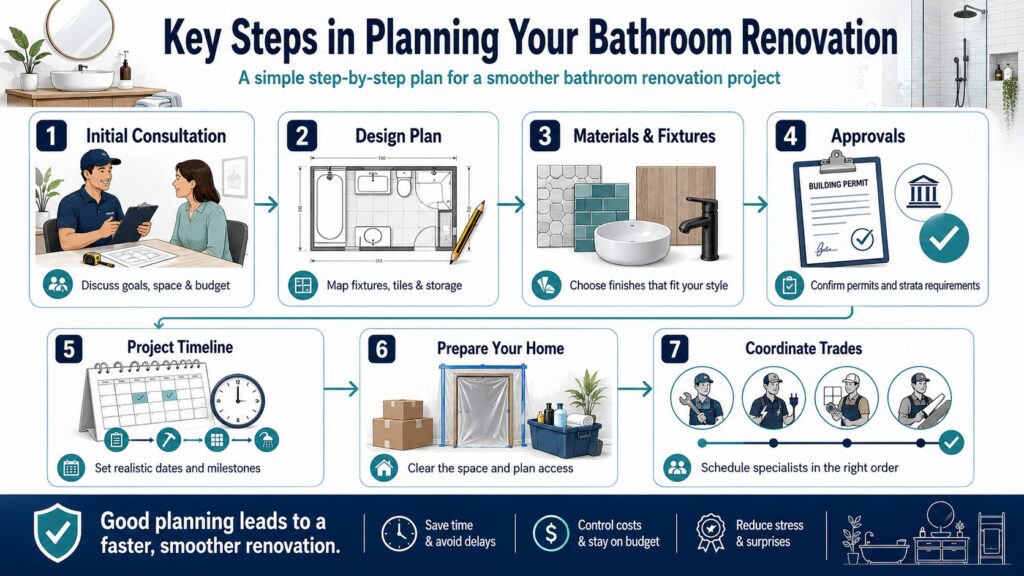
Breaking down the renovation process into manageable stages prevents overwhelm and keeps your project on track. Each step builds on the previous one, creating a logical sequence from concept through completion. Understanding this progression helps you anticipate what comes next and prepare accordingly.
Professional renovation companies follow proven systems that minimize disruption and maximize efficiency. We’ve refined our process over 15 years to deliver consistent results across Sydney Metro homes, from compact Inner West apartments to spacious Hills District family houses.
1. Schedule an Initial Consultation
Your renovation journey begins with a detailed site visit. This meeting allows you to share your vision while experienced renovators assess feasibility and identify potential challenges. Bring your inspiration images, must-have features list, and questions about timeline or process.
During consultation, we examine existing conditions, take measurements, and discuss design preferences. This conversation establishes whether your goals align with your space constraints and budget parameters. Honest feedback at this stage saves disappointment later.
2. Develop a Detailed Design Plan
Design plans translate your vision into buildable specifications. These documents show fixture placement, tile layouts, lighting positions, and storage solutions. Clear plans ensure everyone understands the end goal and prevent miscommunication during construction.
We create designs that balance aesthetics with functionality. A beautiful bathroom that lacks proper ventilation or sufficient storage fails to meet daily needs. Our approach considers how you actually use the space, not just how it photographs.
3. Select Materials and Fixtures
Material choices impact both appearance and durability. Porcelain tiles withstand moisture better than some natural stones, while quality tapware resists corrosion in Sydney’s water conditions. We guide you through options that suit your style preferences and performance requirements.
Visit supplier showrooms to see and touch samples. Colors and textures appear different under various lighting conditions. Selecting materials in person reduces the risk of disappointment when they arrive on site.
Consider maintenance requirements alongside initial appeal. Textured tiles create visual interest but require more cleaning effort than smooth surfaces. Matte finishes hide water spots better than high-gloss options in hard water areas.
4. Obtain Necessary Approvals
Some bathroom renovations require council approval, particularly when structural changes or plumbing modifications occur. Your renovation team should identify permit requirements early to avoid delays. Processing times vary, so factor this into your project timeline.
Strata-titled properties need additional approvals from owners corporations. Submit detailed plans and specifications as required by your building’s bylaws. These processes protect all residents and ensure renovations meet community standards.
5. Finalize Your Project Timeline
Realistic scheduling accounts for material lead times, trade availability, and proper curing periods for waterproofing and tiling. Rushed projects compromise quality and often cost more due to premium charges for expedited materials or after-hours labor.
Standard bathroom renovations typically require two to four weeks, depending on scope and complexity. Larger spaces, custom features, or structural modifications extend this timeframe. We provide clear milestone dates so you know what to expect at each stage.
6. Prepare Your Home for Construction
Clear the bathroom and surrounding areas before work begins. Remove personal items, toiletries, and decorative elements. Protect adjacent rooms from dust by sealing doorways and covering furniture.
Arrange alternative bathroom access for your family. Renovation work disrupts daily routines, so planning temporary solutions reduces stress. Communicate with household members about construction noise and access restrictions.
7. Coordinate Professional Trades
Quality renovations require multiple specialists working in sequence. Plumbers rough in new pipe work, electricians install wiring and outlets, waterproofers seal wet areas, tilers complete floor and wall surfaces, and carpenters fit cabinetry. Coordinating these trades efficiently prevents delays and ensures each stage completes properly before the next begins.
Licensed contractors carry proper insurance and understand compliance requirements. We manage all trade scheduling and quality oversight so you don’t need to chase multiple subcontractors or verify their credentials.
Why Professional Planning Matters for Bathroom Renovations
The difference between a successful renovation and a problematic one often comes down to planning quality. Experienced professionals anticipate issues before they occur and build solutions into the project scope. This foresight prevents costly surprises and delivers better long-term outcomes.
DIY planning seems economical initially but frequently leads to expensive corrections. Homeowners without construction experience struggle to identify structural limitations, compliance requirements, or proper installation sequences. These knowledge gaps create risks that professional expertise eliminates.
Our team brings over 15 years of renovation experience to every project. We’ve solved countless challenges across Sydney homes and understand local building conditions, supplier reliability, and realistic timeframes. This expertise protects your investment and delivers spaces that function beautifully for years.
Common Planning Mistakes to Avoid
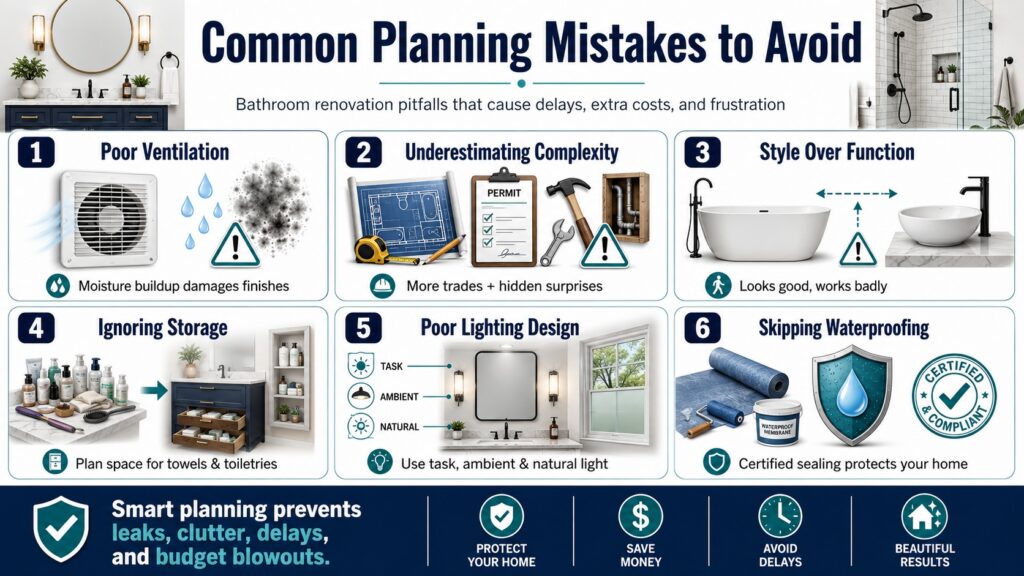
Learning from others’ errors saves you time, money, and frustration. Certain planning mistakes appear repeatedly in bathroom renovations, causing delays and budget overruns. Recognizing these pitfalls helps you avoid them in your own project.
Many homeowners underestimate the importance of proper ventilation. Inadequate exhaust fans lead to moisture buildup, mold growth, and premature finish deterioration. Australian Standards specify minimum ventilation rates based on bathroom size, and compliance protects your investment.
Underestimating Project Complexity
Bathroom renovations involve more trades and technical requirements than most homeowners realize. Waterproofing alone requires specialized knowledge and certification. Electrical work near water sources demands strict safety compliance. Plumbing modifications need proper permits and inspections.
What appears simple often reveals hidden complications once walls open. Asbestos in older homes, non-standard framing, or concealed water damage change project scope. Professional renovators build flexibility into plans to accommodate these discoveries without derailing timelines.
Choosing Style Over Function
Beautiful design means nothing if the space doesn’t work for daily use. Freestanding baths look stunning but consume floor space that compact bathrooms need for movement. Vessel sinks create visual interest but splash water everywhere without proper counter depth.
We balance aesthetics with practicality. Your bathroom should inspire you each morning while efficiently supporting your routine. Thoughtful design achieves both goals without compromise.
Ignoring Storage Requirements
Insufficient storage clutters countertops and undermines even the most beautiful design. Plan for towels, toiletries, cleaning supplies, and personal care items. Built-in niches, recessed cabinets, and vanity drawers keep essentials organized and accessible.
Consider vertical space in compact bathrooms. Wall-mounted cabinets and tall storage units maximize capacity without consuming valuable floor area. Smart storage solutions maintain the clean lines that make small bathrooms feel larger.
Overlooking Lighting Design
Poor lighting ruins bathroom functionality and safety. Task lighting around mirrors supports grooming activities, while ambient lighting creates comfortable atmosphere. Combine multiple light sources at different heights for best results.
Natural light enhances any bathroom but requires privacy solutions. Frosted glass, high windows, or light tubes bring daylight in without compromising discretion. Proper lighting design considers both natural and artificial sources.
Skipping Professional Waterproofing
Waterproofing protects your home’s structure from moisture damage. This critical step requires specialized materials and certified application. Shortcuts here lead to leaks, mold, and expensive repairs that far exceed initial savings from DIY attempts.
Australian Standards mandate waterproofing in wet areas, and compliance requires documentation. Licensed waterproofers provide certificates that protect you legally and financially. We include proper waterproofing in every bathroom renovation, ensuring your space remains dry and durable.
How Location Affects Bathroom Renovation Planning
Geographic factors influence renovation approaches, material availability, and regulatory requirements. While this guide focuses on Sydney Metro planning, understanding regional variations helps homeowners across Australia make informed decisions.
Climate conditions affect material selection and ventilation requirements. Coastal properties face salt air corrosion, while inland areas deal with temperature extremes. These environmental factors inform design choices that ensure long-term performance.
Sydney-Specific Considerations
Heritage homes throughout Inner West suburbs often contain asbestos, requiring specialist removal before renovation begins. Compact apartment bathrooms in Eastern Suburbs demand space-efficient designs that maximize functionality. North Shore properties frequently feature multiple bathrooms, allowing staged renovations that maintain household access.
Sydney’s building regulations and NSW Fair Trading licensing requirements protect homeowners through mandatory compliance standards. Our team maintains current licensing and insurance, ensuring your renovation meets all legal obligations. We serve the entire Sydney Metro, from Northern Beaches through to Sutherland Shire, adapting our approach to each area’s unique characteristics.
Planning for Budget Bathroom Renovations
Financial constraints don’t prevent beautiful, functional bathroom transformations. Strategic planning helps you maximize value within available resources. Focus spending on elements that impact daily use and long-term durability, like quality waterproofing and reliable fixtures.
Cosmetic updates deliver significant visual improvement without extensive structural work. New tiles, fresh paint, updated lighting, and modern tapware refresh tired spaces at manageable expense. We help you prioritize improvements that offer the best return on your renovation investment.
Phased renovations spread expenses over time while still achieving your ultimate vision. Complete essential infrastructure work first, then add finishing touches as budget allows. This approach maintains quality standards while respecting financial realities.
Working With Renovation Professionals
Choosing the right renovation partner determines your project experience and final results. Licensed, experienced companies bring technical expertise, trade coordination, and quality assurance that independent contractors often lack. This support proves invaluable when challenges arise or decisions need quick resolution.
Clear communication forms the foundation of successful renovations. Your team should explain processes in plain language, provide regular updates, and remain accessible for questions. We prioritize transparency, ensuring you understand what’s happening at each project stage.
What to Expect During the Renovation Process
Construction progresses through predictable phases, starting with demolition and rough-in work, advancing through waterproofing and tiling, and finishing with fixture installation and final touches. Each stage requires specific trades and proper completion before the next begins.
Expect some disruption to your daily routine. Noise, dust, and limited bathroom access affect household members. Professional teams minimize inconvenience through efficient scheduling and thorough site protection, but renovation inherently involves temporary discomfort.
Regular site inspections ensure work meets quality standards and follows approved plans. We document progress, address any concerns immediately, and keep you informed throughout the build. This proactive approach prevents small issues from becoming major problems.
Questions to Ask Your Renovation Team
Verify licensing and insurance before committing to any contractor. Ask about their experience with projects similar to yours and request references from recent clients. Understanding their process, communication style, and problem-solving approach helps you assess compatibility.
Discuss warranty coverage and post-completion support. Quality renovators stand behind their work and address any issues that arise after handover. Clear warranty terms protect your investment and provide peace of mind.
Inquire about material sourcing and trade management. Companies with established supplier relationships often secure better pricing and reliable delivery schedules. Direct trade management ensures consistent quality and accountability throughout your project.
Final Preparations Before Your Renovation Begins
Last-minute preparation ensures smooth project commencement. Confirm material deliveries, finalize fixture selections, and establish site access arrangements. These details seem minor but significantly impact construction efficiency.
Review your design plan one final time. Verify that every decision reflects your preferences and that you understand how the finished space will function. Changes during construction cost more and delay completion, so thorough pre-construction review prevents regrets.
Set realistic expectations with household members. Discuss the timeline, temporary bathroom arrangements, and construction impacts. Family cooperation reduces stress and helps everyone navigate the renovation period successfully.
Conclusion
Planning transforms bathroom renovation from overwhelming project into manageable process. Detailed preparation, professional guidance, and realistic expectations deliver spaces that enhance daily life while protecting your investment. Start with clear goals, work with licensed specialists, and maintain open communication throughout the journey to achieve results that exceed your vision.
Antons Renovation brings over 15 years of bathroom renovation expertise to Sydney homeowners. Our licensed team handles every step with precision and transparency. Get started on your dream bathroom today.
Related Articles
- Essential Bathroom Renovation Materials List for Your Dream Space
- Essential Bathroom Renovation Tools Checklist for Homeowners
- Top 5 Strategies for Effective Kitchen and Bathroom Renovations Planning
FAQs
What Are The Steps To Renovate A Bathroom?
Renovating a bathroom typically involves the following steps: planning your design and budget, selecting materials and fixtures, obtaining necessary permits, demolishing the existing space, plumbing and electrical work, installing new fixtures and finishes, and finally, completing the finishing touches. At Antons Renovation, we guide you through each step with our expertise, ensuring a seamless transformation.
How Much Does A Bathroom Renovation Cost?
The cost of a bathroom renovation can vary widely based on factors such as size, materials, and the extent of the remodel. On average, homeowners in Sydney can expect to spend between $10,000 to $30,000. Our team at Antons Renovation works closely with you to tailor your project to fit your budget while delivering exceptional quality and style.
What Should I Consider Before Renovating A Bathroom?
Before renovating a bathroom, consider your needs and lifestyle, the layout and functionality of the space, your budget, and the potential return on investment. It’s also important to think about the choice of materials and fixtures. With over 15 years of experience, Antons Renovation helps you evaluate these factors to create a space that works for you.
How Long Does A Bathroom Renovation Take?
The duration of a bathroom renovation can range from a few weeks to several months, depending on the project’s complexity and size. Generally, a standard renovation takes about 4 to 6 weeks. At Antons Renovation, we prioritize efficiency without compromising quality, ensuring your new bathroom is completed promptly with minimal disruption.
Do I Need A Permit For A Bathroom Renovation?
In most cases, a bathroom renovation does require a permit, especially if plumbing or electrical work is involved. It’s essential to comply with local regulations to avoid issues later on. Our licensed team at Antons Renovation is well-versed in NSW laws and will handle all necessary permits to ensure your project runs smoothly.
