
A small bathroom renovation can transform one of the most-used rooms in your home without breaking the bank. Many Sydney homeowners hesitate to start because they worry about hidden costs or going over budget. The truth is that with careful planning and realistic expectations, you can create a stylish, functional space that fits your financial goals.
This guide breaks down the key cost factors, budget ranges, and smart strategies for small bathroom renovations. You’ll learn where to invest, where to save, and how to avoid common pitfalls that inflate expenses.
Key Takeaways
- Small bathroom renovations in Sydney typically range from basic refreshes to premium upgrades depending on materials and scope.
- Labour and waterproofing compliance account for a significant portion of total project costs.
- Setting a realistic budget upfront helps avoid surprise expenses and keeps your project on track.
- Choosing quality fixtures and finishes can add long-term value and reduce maintenance needs.
- Working with licensed professionals ensures compliance with Australian building standards and protects your investment.
Understanding Small Bathroom Renovation Budget Ranges
Budget planning starts with knowing what you can realistically achieve at different price points. Small bathroom renovations vary widely in cost depending on the scope of work, materials selected, and whether you’re refreshing surfaces or reconfiguring layouts. Breaking down these ranges helps you set clear expectations and make informed decisions.
Most homeowners find that their final costs depend on three main factors. First is the level of finish, from budget-friendly to premium materials. Second is the extent of structural or plumbing changes, which add complexity and labour hours. Third is compliance work like waterproofing, which is non-negotiable under NSW building regulations.
1. Basic Refresh Projects
A basic refresh focuses on cosmetic updates without major structural changes. You might repaint walls, replace tapware, install a new vanity, and update lighting. This approach suits renters or homeowners who want a quick facelift before selling.
Costs for basic refreshes sit at the lower end of the spectrum. You can achieve a noticeable improvement without touching plumbing or electrical layouts. This option works well if your existing fixtures are functional but outdated.
2. Mid-Range Remodels
Mid-range projects involve replacing most fixtures and finishes while maintaining the existing layout. You’ll upgrade the shower, vanity, toilet, tiles, and lighting with quality materials that offer durability and style. This level suits families planning to stay in their home for several years.
Labour and material costs increase because you’re installing new fixtures and ensuring all work meets current building codes. Waterproofing becomes a priority, especially if you’re replacing shower screens or relocating drains. The result is a modern, functional bathroom that adds genuine value to your property.
3. Premium Full Renovations
Premium renovations include custom vanities, high-end tiles, frameless glass screens, underfloor heating, and designer fixtures. You might also reconfigure the layout to improve flow or add storage. This option appeals to homeowners who want a luxury finish and are willing to invest in top-tier materials.
Costs rise due to custom joinery, premium stone or porcelain tiles, and extended labour hours. Every detail is tailored to your vision, from heated towel rails to concealed cisterns. The end result is a showpiece bathroom that rivals high-end hotel suites.
4. Structural and Layout Changes
Relocating plumbing, moving walls, or expanding the footprint adds significant cost. You’ll need engineering assessments, council approvals, and additional trades like plumbers and electricians. This level of work suits older homes where the original layout no longer meets modern needs.
Structural changes extend timelines and require careful coordination. You’re not just updating surfaces but reconfiguring the space itself. The payoff is a bathroom that functions better and uses every square metre efficiently.
5. Accessibility Upgrades
Accessibility renovations focus on safety and ease of use for ageing homeowners or those with mobility challenges. Features include walk-in showers with grab rails, non-slip flooring, and lever-style tapware. These upgrades can be combined with aesthetic improvements for a space that’s both practical and attractive.
Costs vary depending on the extent of modifications. Simple additions like grab rails are affordable, while full wet-room conversions require more investment. We specialise in accessibility renovations that meet Australian Standards without compromising on style.
Key Cost Drivers in Small Bathroom Renovations
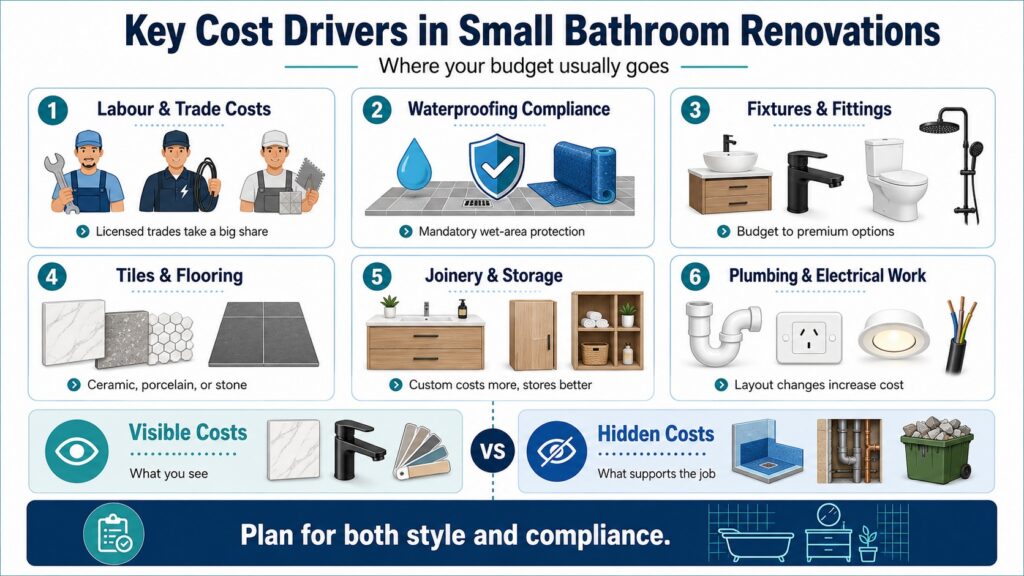
Understanding what drives costs helps you allocate your budget wisely. Some expenses are fixed, like compliance work and labour. Others are flexible, like the choice between ceramic and porcelain tiles. Knowing where your money goes lets you prioritise the features that matter most.
- Labour and Trade Costs: Licensed tradespeople account for a large share of your budget. Plumbers, electricians, tilers, and waterproofers each bring specialised skills. Cutting corners on labour often leads to compliance issues or poor workmanship that costs more to fix later.
- Waterproofing Compliance: All wet areas in NSW must meet strict waterproofing standards. This involves applying membranes to floors and walls, then testing for leaks. Compliance work is mandatory and protects your home from water damage.
- Fixtures and Fittings: Vanities, tapware, showerheads, and toilets come in a wide range of prices. Budget fixtures work fine but may lack durability. Mid-range and premium options offer better warranties, finishes, and long-term performance.
- Tiles and Flooring: Tile selection impacts both cost and aesthetics. Ceramic tiles are affordable and versatile. Porcelain and natural stone tiles cost more but offer superior durability and visual appeal. Large-format tiles reduce grout lines and create a seamless look.
- Joinery and Storage: Custom vanities and built-in shelving add functionality and style. Off-the-shelf vanities are cheaper but may not fit your space perfectly. Custom joinery maximises storage and can be tailored to your exact measurements.
- Plumbing and Electrical Work: Relocating pipes or adding new power points increases costs. Even minor changes require licensed trades and compliance checks. If you’re keeping the existing layout, plumbing costs stay lower.
Every renovation includes both visible and hidden costs. Visible costs cover fixtures, tiles, and finishes you can see and touch. Hidden costs include waterproofing membranes, plumbing adjustments, and waste removal. Both are essential for a successful project.
Small Bathroom Renovations: Sydney vs. Interstate
Renovation costs vary across Australia due to differences in labour rates, material availability, and building regulations. Sydney’s competitive market and higher living costs mean prices tend to sit at the upper end. Comparing Sydney with other cities helps you understand whether your budget is realistic.
Interstate homeowners often search for terms like bathroom renovations Melbourne or bathroom renovations Perth to gauge local pricing. While the principles of good design and quality work remain the same, regional factors influence final costs. Knowing these differences helps you plan if you’re relocating or managing a property in another state.
| City | Typical Range | Key Differences |
|---|---|---|
| Sydney | Mid to high range | Higher labour costs, strict compliance, premium material availability |
| Melbourne | Mid range | Competitive trade market, similar compliance standards, good material choice |
| Perth | Mid to low range | Lower labour costs, fewer trade shortages, but material freight can add expense |
If you’re planning small bathroom renovations Perth or interstate, always check local building codes and licensing requirements. Working with a licensed renovator ensures compliance regardless of location. In Sydney, we handle all regulatory requirements so you don’t have to navigate the paperwork yourself.
Smart Ways to Maximise Your Small Bathroom Renovation Budget
Stretching your budget doesn’t mean sacrificing quality. It means making strategic choices about where to invest and where to save. A few smart decisions can deliver a high-end look without the premium price tag.
Start by prioritising the elements that impact daily use and long-term durability. Invest in quality waterproofing, reliable fixtures, and durable tiles. Save on decorative extras you can update later, like mirrors, towel rails, or paint colours.
1. Keep the Existing Layout
Relocating plumbing and electrical points adds significant cost. If your current layout works reasonably well, keep it. You can still achieve a dramatic transformation by updating fixtures, tiles, and finishes without moving a single pipe.
This approach also speeds up the project timeline. Fewer trades are involved, and there’s less risk of unexpected issues behind walls. You’ll save money and reduce disruption to your household.
2. Choose Mid-Range Fixtures
Mid-range fixtures offer the best balance of quality and cost. Brands like Caroma, Methven, and Reece provide reliable products with good warranties. You don’t need the most expensive tapware to achieve a polished look.
Focus on features that matter, like water efficiency and ease of cleaning. A well-chosen mid-range fixture often outperforms a cheap one and costs less than a luxury brand. We help clients select fixtures that fit their budget without compromising performance.
3. Opt for Larger Tiles
Large-format tiles reduce grout lines and create a spacious feel. They also speed up installation, which can lower labour costs. Porcelain tiles in neutral tones work well in small bathrooms because they reflect light and suit any style.
Avoid intricate patterns or tiny mosaics unless you have budget to spare. Complex tiling requires more time and precision, which increases labour hours. Simple, clean designs deliver a modern look at a lower cost.
4. Invest in Waterproofing
Never skimp on waterproofing. This is the foundation of a leak-free bathroom. Proper membranes and drainage prevent water damage that can cost thousands to repair. All our projects include compliant waterproofing backed by certification.
Think of waterproofing as insurance. You won’t see it once the tiles are down, but it protects your home for decades. Cutting corners here is a false economy that leads to bigger problems later.
5. Plan for a Contingency
Set aside an extra buffer for unexpected issues. Older homes often hide surprises like outdated wiring or hidden water damage. A contingency fund means you can address these problems without derailing your budget.
Most experts recommend holding back around ten percent of your total budget. This cushion gives you flexibility and peace of mind. If no surprises arise, you can upgrade a fixture or add a finishing touch.
Common Budget Mistakes to Avoid in Small Bathroom Renovations
Even experienced homeowners make budgeting errors that inflate costs or lead to disappointing results. Awareness of these pitfalls helps you plan more effectively and avoid regret. Learning from others’ mistakes is cheaper than making them yourself.
- Underestimating Labour Costs: Labour is a major expense, often accounting for half your budget. Choosing an unlicensed handyman to save money can lead to non-compliant work and costly rework. Always hire licensed trades who guarantee their workmanship.
- Ignoring Compliance Requirements: Waterproofing, ventilation, and electrical safety are non-negotiable. Skipping these steps to save money creates legal and safety risks. Non-compliant work must be rectified before you can sell or rent your property.
- Changing Plans Mid-Project: Scope changes during construction add cost and delay. Decide on fixtures, finishes, and layouts before work begins. Last-minute changes disrupt schedules and require additional materials or labour.
- Choosing Fixtures Based on Looks Alone: A stunning fixture that’s hard to clean or breaks easily isn’t a bargain. Consider maintenance, durability, and warranty alongside aesthetics. Quality fixtures save you money over time by reducing repairs and replacements.
- Overlooking Storage Needs: Small bathrooms need smart storage solutions. Failing to plan for adequate shelving or cabinetry leaves you with cluttered counters. Built-in niches, floating vanities, and mirrored cabinets maximise space without adding bulk.
Many budget blowouts stem from poor planning or unrealistic expectations. Rushing decisions, skipping research, or choosing the cheapest quote often backfire. Taking time upfront to plan properly saves money and stress down the track.
Why Professional Help Matters for Small Bathroom Renovations
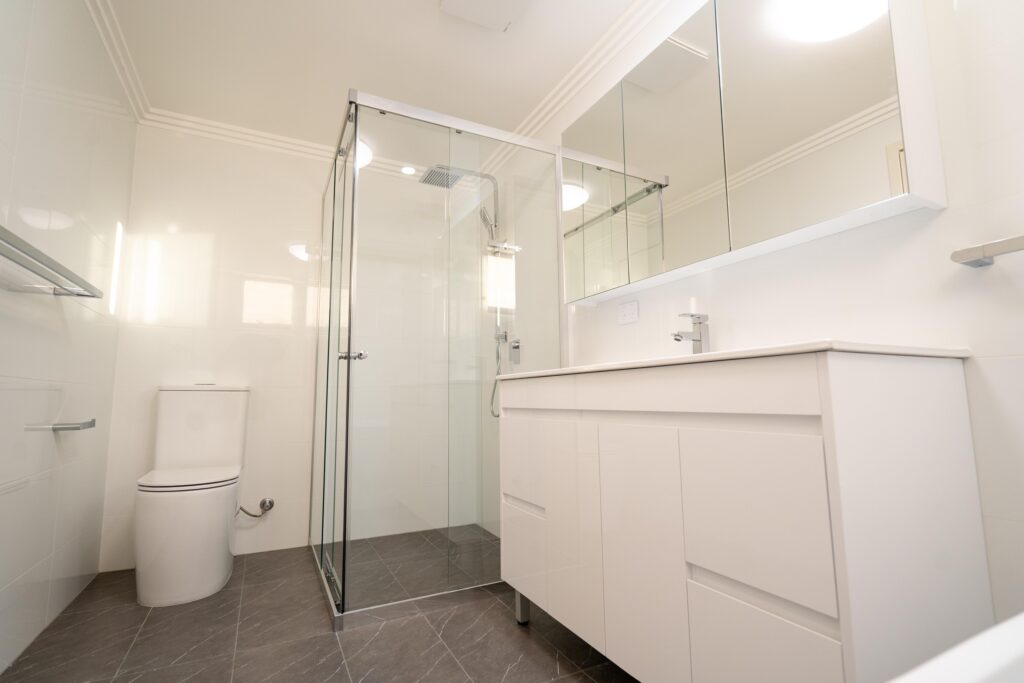
DIY renovations sound appealing but often cost more in the long run. Bathrooms involve plumbing, electrical work, waterproofing, and tiling, all of which require specialised skills. Mistakes in any of these areas can lead to leaks, safety hazards, or failed inspections.
Licensed renovators bring experience, tools, and industry knowledge that DIYers lack. We coordinate trades, source materials at trade prices, and ensure every step meets Australian Standards. You get a finished bathroom that’s compliant, durable, and ready to use without the stress of managing multiple contractors.
Our team handles everything from initial design through to final handover. We provide transparent quotes, realistic timelines, and clear communication at every stage. You’ll know exactly what to expect, with no hidden costs or surprise delays. If you’re ready to transform your small bathroom, call 0466 334 065 or request a free onsite quote today.
Timeline Considerations for Small Bathroom Renovations
Understanding the renovation timeline helps you plan around disruptions and set realistic expectations. Small bathroom projects typically take two to four weeks, depending on scope and complexity. Rushed timelines often lead to mistakes or compromise on quality.
Pre-Construction Phase
This phase includes consultation, design, material selection, and approvals. We measure your space, discuss your vision, and provide a detailed quote. Once you approve the plan, we order materials and schedule trades. Pre-construction can take one to two weeks depending on material lead times.
Thorough planning prevents delays during construction. We confirm every detail before work begins, from tile layout to fixture placement. This upfront investment saves time and avoids costly changes later.
Demolition and Preparation
Demolition involves removing old fixtures, tiles, and fittings. We protect surrounding areas and manage waste disposal. This stage typically takes one to two days. Once demolition is complete, we assess the substrate and make any necessary repairs.
Hidden issues like water damage or outdated wiring sometimes emerge during demolition. A contingency budget helps address these problems without delaying the project. We keep you informed and provide solutions promptly.
Waterproofing and Compliance
Waterproofing is a critical step that must cure properly before tiling begins. We apply membranes to floors, walls, and wet areas, then conduct flood testing to ensure compliance. This process takes several days and cannot be rushed.
All waterproofing is certified and documented. You’ll receive a certificate of compliance that’s essential for future sales or insurance claims. This step protects your investment and gives you peace of mind.
Installation and Finishing
Tiling, plumbing, electrical work, and fixture installation happen in this phase. Trades work in sequence to avoid delays. Tiling alone can take several days, depending on the complexity of the layout. Once tiles are set, we install vanities, tapware, shower screens, and accessories.
Final touches include grouting, sealing, painting, and cleaning. We conduct a thorough inspection to ensure everything meets our quality standards. You’ll walk through the finished bathroom with us before final handover.
We provide a clear schedule at the start of every project. You’ll know when trades arrive, when key milestones happen, and when you can use your bathroom again. Communication is key to minimising surprises and keeping everyone on the same page.
Regional Insights: Small Bathroom Renovations Across Australia
Renovation trends and costs vary across Australian cities. Sydney homeowners prioritise compliance and quality due to strict building regulations and competitive property markets. Melbourne and Perth residents often seek value-driven solutions that balance cost and style.
Searches for small bathroom renovations Perth or bathroom renovations Melbourne reflect regional interest in budget-friendly upgrades. While the fundamentals of good design remain consistent, local trade availability and material costs influence final pricing. We focus on Sydney projects but understand the broader Australian renovation landscape.
Homeowners in Perth benefit from lower labour costs but may face higher freight charges for premium materials. Melbourne’s established trade networks offer competitive pricing and a wide range of suppliers. Sydney’s premium market means higher costs but also access to the latest design trends and top-tier tradespeople.
Regardless of location, the principles of smart budgeting apply. Prioritise quality where it matters, plan thoroughly, and work with licensed professionals. A well-executed small bathroom renovation adds value and enjoyment no matter where you live.
Conclusions
A small bathroom renovation is an investment in comfort, functionality, and property value. With careful planning and realistic budgeting, you can create a space that meets your needs and reflects your style. Prioritise quality materials, compliant workmanship, and professional guidance to ensure lasting results that you’ll enjoy for years to come.
Antons Renovation brings over 15 years of bathroom renovation expertise to Sydney homeowners. We deliver stylish, functional spaces that respect your budget and timeline. Get started with a trusted local team today.
Related Articles
- Bathroom Restoration Cost Guide for Smart Renovation Planning
- 5 Key Factors Affecting Bathroom Refurbishment Cost
- How to Plan a Bathroom Renovation on a Budget
FAQs
What Is The Average Cost Of A Small Bathroom Renovation?
The average cost of a small bathroom renovation typically ranges from $10,000 to $25,000, depending on the extent of the upgrades and materials used. At Antons Renovation, we tailor each project to fit your budget, ensuring you receive quality craftsmanship without overspending.
How Can I Renovate A Small Bathroom On A Budget?
To renovate a small bathroom on a budget, consider focusing on cosmetic changes like repainting, updating fixtures, and re-grouting tiles. Our experienced team at Antons Renovation can help you identify cost-effective solutions that enhance your space without compromising on style.
What Are The Most Cost-Effective Ways To Update A Small Bathroom?
Some cost-effective ways to update a small bathroom include replacing dated hardware, incorporating open shelving, and opting for a fresh coat of paint. We can guide you in selecting materials and finishes that elevate your space while sticking to your budget.
How Much Should I Budget For A Small Bathroom Remodel?
When budgeting for a small bathroom remodel, it’s advisable to allocate between $10,000 and $20,000, factoring in labor and materials. Our team at Antons Renovation will work closely with you to create a detailed budget that aligns with your renovation goals.
What Are Some Budget-Friendly Small Bathroom Renovation Ideas?
Budget-friendly small bathroom renovation ideas include installing new lighting, using peel-and-stick tiles, and updating your vanity. At Antons Renovation, we specialize in creating customized solutions that enhance both functionality and aesthetics without breaking the bank.
