
Planning a bathroom renovation means understanding what drives the final price tag. Every project is different, and the cost to renovate a bathroom depends on choices you make about layout, materials, fixtures, and who does the work. Knowing these factors upfront helps you budget wisely and avoid surprises halfway through the build.
This article breaks down the five key elements that shape bathroom refurbishment cost. You’ll learn how room size, fixture selection, labour requirements, compliance needs, and project scope all play a role in determining what you’ll spend.
Key Takeaways
- Room size and layout complexity directly influence labour hours and material quantities required.
- Fixture and finish choices, from budget to premium, create the widest cost variation in any bathroom makeover.
- Licensed trades and waterproofing compliance add necessary expense but protect your investment long-term.
- Project scope, whether cosmetic refresh or full structural remodel, determines the scale of work and budget needed.
- Timeline and scheduling flexibility can reduce costs, while rushed projects increase labour and coordination expenses.
1. Room Size and Layout Configuration
The physical dimensions of your bathroom set the foundation for every cost estimate. A compact ensuite requires less tiling, fewer fixtures, and shorter plumbing runs than a family bathroom with separate shower and bath. Square meterage determines material quantities, labour hours, and how much structural work the space demands.
Layout changes add complexity and expense. Moving a toilet or relocating the shower involves rerouting pipes, adjusting drainage, and sometimes breaking into walls or floors. Simple cosmetic updates that keep existing plumbing positions cost less than full reconfiguration projects that require licensed plumbers and additional building approvals.
Ceiling height and accessibility also matter. Bathrooms with high ceilings need scaffolding or elevated work platforms, increasing labour time. Tight spaces limit movement for trades, slowing installation and sometimes requiring custom-cut materials that cost more than standard sizes.
2. Fixture and Finish Selection
What you install in your bathroom creates the biggest swing in bathroom makeover cost. A basic wall-hung vanity with a ceramic basin costs a fraction of a custom timber unit with stone benchtop and undermount sink. The same applies to tapware, showerheads, toilets, and bathtubs. Premium brands and designer finishes push budgets higher, while quality mid-range options deliver style and durability at lower price points.
Tile choices influence both material and labour expenses. Large-format porcelain tiles install faster and reduce grout lines, but they cost more per square metre than standard ceramic. Natural stone like marble or travertine adds luxury but requires sealing and careful handling during installation. Patterned or mosaic tiles demand precision cutting and longer installation times, raising labour costs even if the tiles themselves are affordable.
Vanity and Cabinetry Options
Off-the-shelf vanities from major suppliers offer the most budget-friendly path. They come in standard sizes, ready to install, and include basic fixtures. Custom joinery tailored to your exact dimensions and storage needs costs more but maximises space and matches your design vision perfectly. The bathroom vanity installation cost depends on whether you choose freestanding, wall-hung, or floating styles, each requiring different mounting and plumbing adjustments.
Shower and Bath Fixtures
A simple mixer tap and handheld showerhead meet basic needs at low cost. Thermostatic valves, rain showerheads, and body jets add comfort and style but increase both purchase price and installation complexity. Freestanding baths make a statement but need floor reinforcement and dedicated plumbing, while drop-in or alcove tubs integrate more easily into standard layouts. The bathroom vanity replacement cost often surprises homeowners when they discover how much labour goes into disconnecting old plumbing, removing the unit, and fitting the new one correctly.
Tapware and Accessories
Chrome-plated brass tapware offers durability at entry-level pricing. Brushed nickel, matte black, or rose gold finishes cost more but deliver on-trend aesthetics. Sensor taps, wall-mounted mixers, and waterfall spouts add functionality and visual interest, though they require additional rough-in work during the build phase. Towel rails, toilet roll holders, and robe hooks seem minor but add up quickly when you choose matching premium ranges.
3. Labour and Trade Requirements
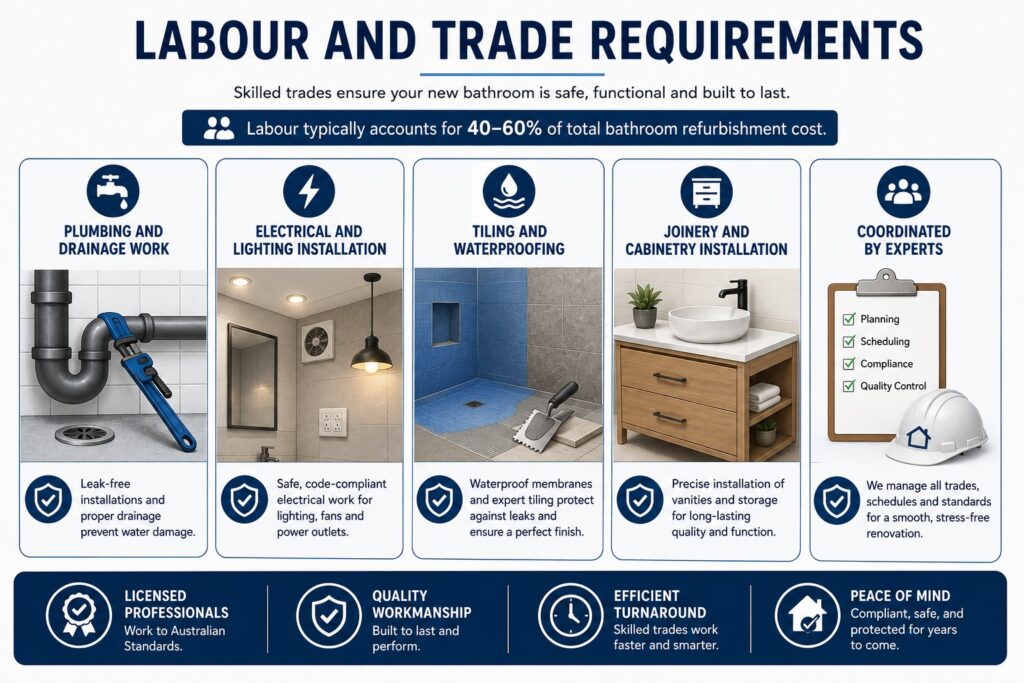
Skilled trades form the backbone of any bathroom renovation. Licensed plumbers, electricians, tilers, waterproofers, and carpenters each bring specialised expertise that ensures your new bathroom functions safely and lasts for years. Labour typically accounts for 40 to 60 percent of total bathroom refurbishment cost, depending on project complexity and how much coordination the job demands.
Hiring licensed professionals costs more upfront but protects you from costly mistakes and compliance failures. Unlicensed or uninsured workers might quote lower rates, but they leave you exposed to faulty work, legal liability, and expensive repairs down the track. Quality trades also work faster and more efficiently, reducing overall project time and minimising disruption to your household.
Plumbing and Drainage Work
Every bathroom needs water supply lines, drainage pipes, and proper waste connections. Replacing old pipework, upgrading to modern fixtures, or relocating plumbing points requires licensed plumbers who understand Australian standards and local council requirements. Leak-free installations and correct fall on drainage prevent water damage and ensure long-term performance.
Electrical and Lighting Installation
Bathroom lighting, exhaust fans, heated towel rails, and power outlets all need certified electrical work. Wet areas have strict safety regulations around socket placement and circuit protection. Downlights, LED strips, and feature lighting add ambience but require careful planning and professional installation to meet code and avoid moisture ingress.
Tiling and Waterproofing
Waterproofing is mandatory in all wet areas, including shower bases, bath surrounds, and floor zones. Licensed waterproofers apply membrane systems that prevent water seeping into walls and subfloors. Tilers then install your chosen tiles, ensuring proper adhesion, alignment, and grout application. Cutting tiles around fixtures, creating falls to drains, and finishing edges all demand skill and experience.
Joinery and Cabinetry Installation
Custom vanities, built-in storage, and shelving require precise measurement, cutting, and fitting. Carpenters or joiners handle this work, securing units to walls, connecting plumbing, and ensuring doors and drawers operate smoothly. Quality installation prevents sagging, water damage, and premature wear.
We bring together all these licensed trades under one coordinated project. Our team manages scheduling, compliance, and quality control so you get a bathroom that looks stunning and functions flawlessly. With over 15 years of experience across Sydney, we know how to deliver fast turnarounds without cutting corners.
4. Compliance and Waterproofing Standards
Australian building codes set strict requirements for bathroom construction. Waterproofing must meet AS 3740 standards, which specify membrane types, application methods, and testing procedures. Non-compliance voids insurance, creates legal liability, and leads to structural damage when water escapes into walls or floors. These regulations exist to protect homeowners, and meeting them adds necessary cost to any renovation.
| Compliance Element | Purpose | Typical Cost Impact |
|---|---|---|
| Waterproofing membrane | Prevents water leaks into structure | Moderate |
| Licensed trade certifications | Ensures work meets legal standards | Built into labour rates |
| Council inspections | Verifies compliance before handover | Low to moderate |
| Exhaust fan to code | Controls moisture and mould risk | Low |
Council approvals and inspections also factor into timelines and budgets. Depending on the scope of work, you may need development consent or a complying development certificate. Structural changes, new plumbing, or electrical upgrades often trigger inspection requirements. Licensed contractors handle these processes, ensuring paperwork is filed correctly and work passes all checks.
Ventilation standards require exhaust fans that meet minimum airflow rates. Poor ventilation leads to mould, peeling paint, and deteriorating fixtures. Compliance-grade fans cost more than basic models but deliver the performance needed to keep your bathroom dry and healthy.
We handle all compliance documentation and coordinate inspections as part of our service. Every project includes waterproofing certificates, licensed trade records, and clear communication with local councils. You get peace of mind knowing your bathroom meets every legal requirement.
5. Project Scope and Renovation Depth
The extent of work you plan determines how much time, materials, and labour your bathroom needs. A cosmetic refresh that replaces fixtures, repaints walls, and updates accessories costs far less than a full gut-and-rebuild that strips the room back to studs and starts from scratch. Understanding your goals helps you set a realistic budget and choose the right level of renovation for your home.
Cosmetic updates focus on surface changes. You might replace the vanity, install new tapware, regrout tiles, and add fresh paint. Plumbing and electrical systems stay in place, keeping labour costs lower. This approach suits bathrooms with sound structure and layout but tired finishes.
Mid-range remodels go deeper. They often include new tiling, upgraded fixtures, improved lighting, and sometimes minor layout tweaks like enlarging the shower or adding a niche. These projects require more trades, longer timelines, and careful coordination but deliver noticeable improvements in function and style.
Full Structural Renovations
Complete overhauls involve removing everything down to the frame. Walls come out, plumbing and electrical systems get replaced, and the entire room is rebuilt to a new design. This level of work costs the most but gives you total freedom to reconfigure layout, upgrade all services, and install premium finishes throughout. Structural renovations suit older homes, bathrooms with serious water damage, or homeowners wanting a complete transformation.
Accessibility Upgrades
Adding walk-in showers, grab rails, non-slip flooring, and wider doorways makes bathrooms safer and more functional for ageing in place or mobility needs. These modifications often require layout changes, reinforced walls for rail mounting, and specialised fixtures. The bathroom vanities installation cost increases when you need height-adjustable units or wheelchair-accessible clearances.
Luxury and Custom Features
Heated floors, frameless glass screens, freestanding baths, and smart mirrors elevate your bathroom into a spa-like retreat. These features add both material and installation expenses. Heated flooring needs electrical underlays and thermostats. Frameless glass requires precise measurement and professional fitting. Custom mirrors with integrated lighting demand coordination between electricians and glaziers.
You might be wondering how to balance your wish list with your budget. Start by identifying must-haves versus nice-to-haves. Focus spending on elements that improve daily function and long-term durability, like quality waterproofing and reliable fixtures. Save on decorative touches you can upgrade later, like towel rails or artwork.
Our team guides you through this planning process. We listen to your priorities, explain trade-offs, and design a bathroom that fits your budget without compromising on quality or compliance. From initial consultation to final handover, we keep communication clear and timelines realistic.
Other Factors to Consider in Bathroom Refurbishment Cost
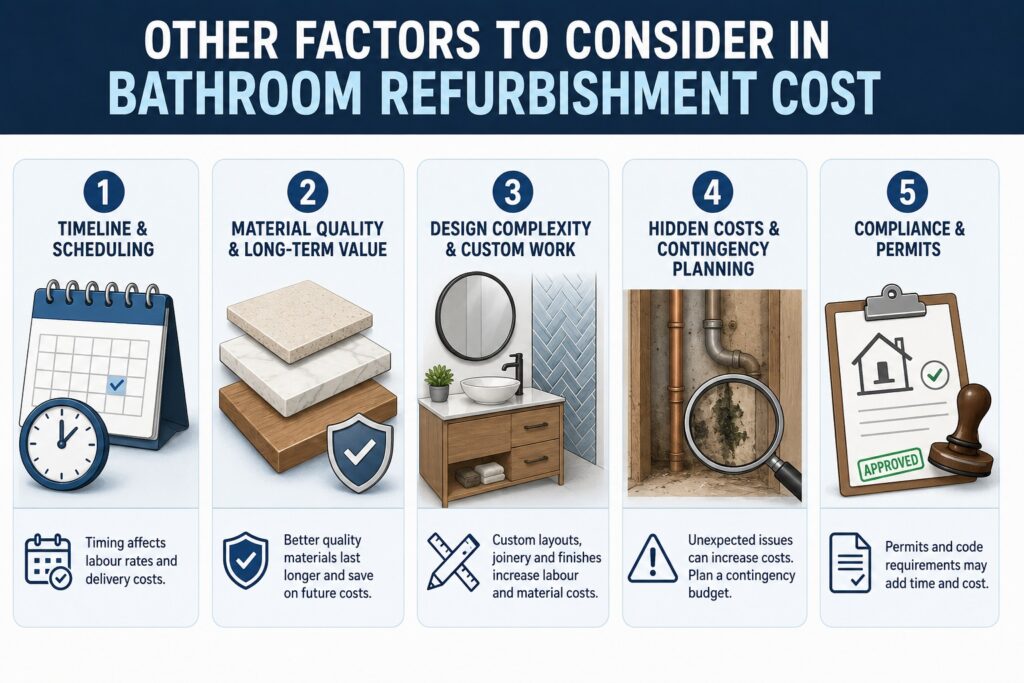
Beyond the main cost drivers, there are other factors that can still affect your final bathroom refurbishment budget. These additional considerations often influence pricing through project timing, material lifespan, custom design choices, and unexpected conditions uncovered during the build. Including them in your planning helps create a more realistic budget and reduces the risk of cost surprises later.
How Timeline and Scheduling Affect Bathroom Refurbishment Cost
Project timing can influence labour rates, supplier availability, and how smoothly each stage of the refurbishment progresses. Standard timelines usually help keep costs under control because trades can work in sequence, materials can be ordered ahead, and inspections can be scheduled without extra pressure. In contrast, rushed jobs often increase costs through overtime labour, premium scheduling fees, and expedited deliveries.
Material Quality and Long-Term Value
Material quality affects not only the upfront refurbishment cost but also how well the bathroom performs over time. Higher-quality products often last longer, resist moisture better, and require less maintenance, which can reduce future repair or replacement expenses. Mid-range products can also offer strong long-term value when they balance durability, appearance, and reasonable pricing.
Design Complexity and Custom Work
The more complex the bathroom design, the more labour, time, and specialised work the refurbishment is likely to require. Straightforward layouts with standard fixtures are generally faster and more affordable to install, while custom joinery, recessed storage, intricate tile work, and specialty finishes add to both labour and material costs. These custom elements can improve function and style, but they should be considered carefully against the available budget.
Hidden Costs and Contingency Planning
Unexpected issues found during demolition or construction can increase the overall project cost even when the original quote seems clear. Problems such as ageing plumbing, mould, damaged framing, asbestos, or non-compliant electrical work often need to be addressed before the refurbishment can continue properly. Setting aside a contingency budget helps homeowners handle these additional costs more confidently and keeps the project moving if hidden issues arise.
These added considerations may not always be the first things homeowners focus on, but they can still have a meaningful impact on the total refurbishment budget. A bathroom project is easier to manage when both the primary cost drivers and these secondary influences are considered together. By planning for them early, homeowners can make more informed choices and avoid unnecessary financial pressure during the renovation.
Choosing the Right Renovation Partner
Who you hire shapes every aspect of your bathroom project. Licensed, experienced renovators bring expertise, accountability, and quality workmanship. They manage trades, source materials, handle compliance, and deliver results that last. Unlicensed operators or inexperienced builders cut corners, miss regulations, and leave you with costly problems.
Transparent pricing matters. Fixed-rate quotes based on detailed plans prevent scope creep and budget overruns. Clear contracts outline timelines, responsibilities, and what happens if changes arise. Communication throughout the build keeps you informed and confident.
Local knowledge helps too. Renovators familiar with Sydney councils, suppliers, and trade networks navigate approvals faster and secure better material prices. They understand local building conditions, common challenges, and how to adapt designs to suit Sydney homes.
Our family-owned business has served Sydney homeowners for over 15 years. We hold current NSW Fair Trading licenses, maintain full insurance, and comply with all Australian building standards. From the Inner West to the Northern Beaches, we deliver bathroom renovations that combine style, function, and lasting quality. Our streamlined process respects your time and home, with minimal disruption and maximum results.
Conclusion
Bathroom refurbishment cost depends on room size, fixture choices, labour needs, compliance requirements, and project scope. Understanding these factors helps you plan wisely and invest in a renovation that meets your needs and budget. Quality materials, licensed trades, and clear communication deliver bathrooms that perform beautifully for years. Call 0466 334 065 or request a free onsite quote to start your bathroom transformation with confidence.
Antons Renovation brings over 15 years of bathroom renovation expertise across Sydney Metro. We deliver transparent pricing and premium workmanship on every project. Get started with a consultation today.
Related Articles
- Top 5 Practical Tips for a Successful Bathroom Refurbishment
- Top Considerations for a Successful Shower Refurbishment Project
- Bathroom Restoration Cost Guide for Smart Renovation Planning
FAQs
What Is The Average Cost Of A Bathroom Refurbishment?
The average cost of a bathroom refurbishment in Sydney typically ranges from $10,000 to $30,000, depending on the size, materials, and scope of the project. At Antons Renovation, we tailor each project to fit your budget while ensuring high-quality finishes and craftsmanship.
How Much Does It Cost To Remodel A Small Bathroom?
Remodeling a small bathroom usually costs between $5,000 and $15,000. Factors such as layout changes, fixtures, and finishes can influence the final price. Our experienced team at Antons Renovation can help you maximize your small space with stylish and functional designs.
What Factors Affect The Cost Of Bathroom Refurbishment?
Several factors can affect the cost of bathroom refurbishment, including the size of the space, quality of materials, plumbing and electrical work, and any structural changes. With over 15 years of experience, Antons Renovation carefully assesses each factor to provide a transparent and accurate quote tailored to your needs.
Is It Cheaper To Remodel Or Renovate A Bathroom?
Generally, remodeling tends to be less expensive than a full renovation, as it often involves updating existing structures rather than making significant changes. At Antons Renovation, we offer customized solutions that suit your goals, whether it’s a simple remodel or a more extensive renovation.
How Long Does A Bathroom Refurbishment Take?
The duration of a bathroom refurbishment can vary, but most projects take between 2 to 4 weeks to complete. Our team at Antons Renovation values efficiency and aims to minimize disruption to your home while delivering exceptional results in a timely manner.
